

 MMM
MMM The Only Constant is Change. Your Only Advantage is Learning.
Remember when you finished school? That feeling of closing the last textbook, walking out of the final exam, and thinking, “That’s it. I’m done with learning.” It was a nice thought, wasn’t it? For our parents’ generation, it was largely true. You got your degree or your trade, you got a job, and you pretty much did that job for the next 40 years. The skills you learned in your early twenties were, for the most part, the skills you retired with. But that world is gone. Completely. In its place is a reality that moves at the speed of a software update. What does it mean to be a lifelong learner in this new, chaotic, and incredibly exciting environment? It’s not about being a perpetual student in a formal classroom. It’s about cultivating a mindset of constant curiosity and adaptation. It’s about realizing that learning isn’t a phase of life; it’s the only way to navigate it.
Key Takeaways
- It’s a Mindset, Not a Degree: Being a lifelong learner is about curiosity and a growth mindset, not about collecting certificates.
- Adaptability is the New Job Security: In a world where industries can be disrupted overnight, the ability to learn new skills quickly is your greatest career asset.
- Technology is Your Ally: The very tools driving rapid change (the internet, AI, online platforms) are also the greatest resources for continuous learning in human history.
- It’s Both Professional and Personal: Lifelong learning enhances your career prospects, but it also enriches your life, improves brain health, and boosts personal fulfillment.
The Old Model is Broken: Why ‘Finished’ Education is a Fantasy
The traditional model of education was ‘front-loaded.’ You spent the first two decades of your life cramming information into your brain, and then you spent the next four decades applying it. It was a linear path: Learn -> Do -> Retire. This worked when the world moved more slowly. A mechanic who learned to fix a carburetor in 1970 could use that skill for decades. An accountant who learned the tax code in 1980 could rely on that foundational knowledge for most of their career.
That’s just not our reality anymore. A web developer who learned the top programming framework from five years ago might find that skill is now obsolete. A marketer who mastered Facebook ads in 2015 has had to completely relearn their job multiple times as algorithms, platforms, and consumer behaviors shifted. The ‘half-life’ of a professional skill—the time it takes for a skill to be half as valuable as it was when first learned—has shrunk dramatically. Some estimates put it at less than five years for many technical skills.
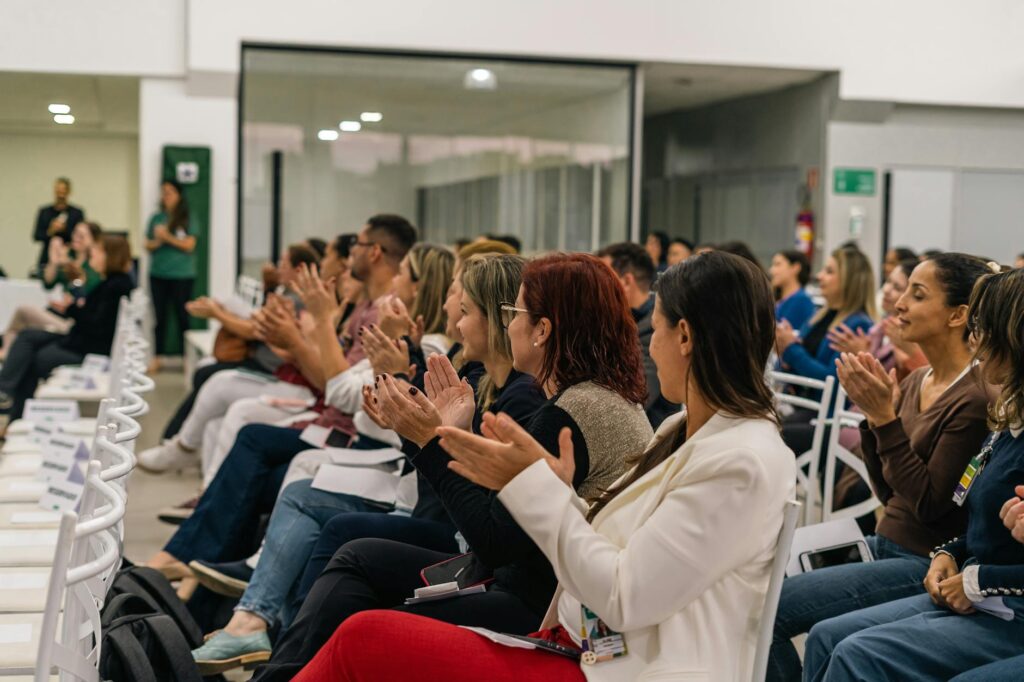
What’s driving this? A perfect storm of factors:
- Technological Acceleration: Moore’s Law isn’t just for computer chips. The pace of innovation in AI, automation, biotechnology, and countless other fields is exponential.
- Globalization and Connectivity: Ideas and competition can come from anywhere in the world, instantly. What was a niche local skill yesterday could be a globally commoditized service tomorrow.
- The Gig Economy: The rise of freelance and contract work means more people are responsible for managing their own career trajectories and keeping their skill sets sharp and marketable. There’s no corporate training department to rely on.
Trying to navigate this new landscape with the old map of ‘learn-then-do’ is like trying to cross an ocean in a rowboat. You’ll simply be left behind. The new model is a continuous cycle: Learn -> Do -> Unlearn -> Relearn. It’s fluid, dynamic, and it never, ever stops.
The Mindset of a Modern Lifelong Learner
Okay, so we know the world is changing fast. But what separates someone who thrives in this environment from someone who feels constantly overwhelmed? It isn’t about being a genius or having a photographic memory. It’s about your internal operating system—your mindset. Adopting the mindset of a lifelong learner is the single most important step.
Curiosity is Your Compass
Kids are born curious. They ask ‘why?’ incessantly. They poke things, take them apart, and try to figure out how the world works. A lifelong learner retains that childlike wonder. It’s a shift from ‘I have to learn this for my job’ to ‘I wonder how that works.’ It’s the engine that drives you to read an article on a topic you know nothing about, watch a documentary outside your usual interests, or ask a colleague from another department to explain what they do. This isn’t about aimless wandering; it’s about following threads of interest that can lead to unexpected breakthroughs and connections. When you’re genuinely curious, learning stops feeling like a chore and starts feeling like an adventure.
From ‘Know-it-All’ to ‘Learn-it-All’
This is a big one. The ‘know-it-all’ posture is a defense mechanism rooted in fear—the fear of looking incompetent. The ‘learn-it-all’ embraces not knowing. It’s the humility to say, “I don’t know, but I can find out.” It’s the confidence to ask ‘dumb’ questions. It’s understanding that in a complex world, no one has all the answers. This approach is incredibly freeing. It opens you up to feedback, allows you to collaborate more effectively, and prevents you from becoming rigid in your thinking.
“The learn-it-all will always do better than the know-it-all in a world that is constantly changing.” – Satya Nadella, CEO of Microsoft
Embracing the Awkwardness of Being a Beginner
Let’s be honest: being a beginner sucks. You’re slow, you make mistakes, and you feel clumsy. As we get older and more established in our careers, we can become addicted to the feeling of competence. The thought of starting something new—learning a new software, a new language, or even a new hobby like playing the guitar—can be daunting because it forces us back into that uncomfortable beginner phase. A lifelong learner gets comfortable with this discomfort. They reframe it. Instead of seeing mistakes as failures, they see them as data points. They understand that the awkward phase is the non-negotiable price of entry to acquiring any new skill. It’s a temporary state, not a permanent identity.
Putting It Into Practice: Skills and Habits for Continuous Learning
A great mindset is the foundation, but you need a structure to build on it. Turning the idea of lifelong learning into a reality requires creating systems and habits. It doesn’t have to be complicated. In fact, simple and consistent is far better than ambitious and sporadic.

Build Your Personal ‘Learning Stack’
Just like a developer has a ‘tech stack’ (the set of tools they use to build software), you should have a ‘learning stack.’ This is your curated set of resources for taking in new information. It’s personal and should be tailored to how you learn best. Your stack might include:
- Podcasts: For learning during your commute, workout, or while doing chores.
- Newsletters: Highly-curated emails on specific topics (like the Morning Brew for business or Stratechery for tech analysis).
- Online Courses: Platforms like Coursera, edX, and Skillshare offer everything from university-level courses to practical creative skills.
- YouTube: An incredible resource for everything from tutorials on Excel to deep-dive lectures from MIT.
- Audiobooks & E-books: Use library apps like Libby to get free access to a universe of knowledge.
- RSS Readers: Tools like Feedly allow you to pull in articles from all your favorite blogs and news sites into one place.
The key isn’t to use everything, but to consciously choose a few tools that fit your lifestyle and stick with them.
Master the Art of ‘Just-in-Time’ Learning
The old model was ‘just-in-case’ learning—you learned a bunch of stuff in school just in case you might need it one day. The modern approach is often ‘just-in-time’ learning. This means learning something specific when you have an immediate need for it. For example, instead of deciding to ‘learn about AI,’ which is overwhelmingly broad, you might say, “I need to figure out how to use ChatGPT to help me write better marketing copy for this specific project.” This approach is highly motivating because the application is immediate and the reward is tangible. You solve a real problem and acquire a new skill simultaneously.
Schedule It or It Won’t Happen
One of the most famous habits of successful learners is the “5-Hour Rule,” practiced by people like Bill Gates and Warren Buffett. It’s the simple idea of setting aside at least one hour a day (or five hours a week) for deliberate learning and practice. This could be reading, reflection, or experimentation. For most of us, an hour a day might seem impossible. So start smaller. Block out 20 minutes in your calendar three times a week. Protect that time as if it were an important meeting. The consistency of the habit matters far more than the duration of each session. You’d be amazed at what you can learn in just a few focused hours spread throughout the week.
The Real Payoff: Why Bother With All This?
This all sounds like a lot of work. And it is. So, what’s in it for you? The benefits go far beyond just keeping your job.
- Career Resilience: This is the big one. Lifelong learning is the ultimate form of career insurance. When you’re constantly adding new skills and knowledge, you’re not afraid of your industry changing. You’re not tied to a single job title or company. You become more adaptable, more valuable, and ultimately, more in control of your own professional destiny.
- Increased Innovation and Creativity: Groundbreaking ideas often happen at the intersection of different fields. When you learn about topics outside your immediate area of expertise, you build a broader mental library of concepts. You can then connect these disparate ideas in novel ways to solve problems that people with narrower perspectives can’t.
- A Healthier Brain: The science is clear on this. Actively learning new and challenging things helps build new neural pathways and can delay the onset of cognitive decline. It’s literally exercise for your brain, keeping it sharp and flexible as you age.
- Greater Personal Fulfillment: Learning is empowering. Mastering a new skill, understanding a complex topic, or discovering a new passion brings a deep sense of satisfaction and confidence. It makes life more interesting. It opens up new communities of people and new ways of seeing the world.

Conclusion: Learning as a Way of Life
Being a lifelong learner in the 21st century isn’t about frantically trying to know everything. That’s impossible. It’s about changing your relationship with knowledge itself. It’s a shift from viewing learning as a finite project to be completed, to seeing it as an ongoing process of growth and discovery. It’s about staying curious, being humble, and embracing the challenge of the unknown. It’s not just a strategy for professional survival; it’s a blueprint for a more engaged, resilient, and fulfilling life. The world will keep changing, but your capacity to learn is the one tool that will never become obsolete.
FAQ
Is being a lifelong learner just about professional development?
Not at all! While the career benefits are significant, it’s equally about personal enrichment. Learning to play a musical instrument, studying a new language, or getting into amateur astronomy has immense benefits for your brain health, creativity, and overall happiness. Often, the personal learning you do for fun can have unexpected positive impacts on your professional life by teaching you new ways to think and solve problems.
How can I stay motivated to learn consistently?
The key is to link your learning to something you care about. Tie it to a specific goal (e.g., “I want to build a simple website for my hobby”), follow your genuine curiosity rather than what you think you *should* learn, and find a community. Joining a book club, an online forum, or taking a class with others can provide the accountability and social connection that makes learning stick.
What’s the difference between upskilling and reskilling?
They’re related but distinct. Upskilling is about getting better at your current job. For example, a graphic designer learning a new piece of animation software is upskilling. Reskilling is about learning a new set of skills to do a different job. For example, a factory worker learning to code to become a software developer is reskilling. Both are critical components of lifelong learning in today’s economy.


 Why a Real Student Vacation is Crucial for Success
  Your University Library: More Than Just Books
  Protecting Your Intellectual Property: A Student’s Guide
  Psychology of Motivation: What Drives Students to Succeed
  Fact-Check & Verify Information in the AI Era: Your Guide
  VR and AR in Studies: The Ultimate Student Guide
  Backtest Crypto Trading Strategies: A Complete Guide
  NFT Standards: A Cross-Chain Guide for Creators & Collectors
  Decentralized Storage: IPFS & Arweave Explained Simply
  How to Calculate Cryptocurrency Taxes: A Simple Guide
  Your Guide to Music NFTs & Top Platforms for 2024
  TradingView for Crypto: The Ultimate Trader’s Guide