

 MMM
MMM A Guide to the World’s Most Remote Inhabited Islands
Ever feel the urge to just… disappear? To unplug not just from your Wi-Fi, but from the entire frantic hum of the modern world? We’re not talking about a weekend camping trip. We’re talking about places where the arrival of a ship is the biggest event of the year, where your neighbors are the only people you’ll see for months, and where the outside world feels like a distant rumor. Welcome to the world of remote inhabited islands, the last outposts of humanity scattered across the vast, empty expanses of our planet’s oceans. These are not tourist resorts with spotty internet; they are living, breathing communities clinging to existence at the very edge of the map.
Key Takeaways: This guide explores the most isolated communities on Earth. We’ll journey to Tristan da Cunha, the most remote inhabited archipelago; Pitcairn Island, home to the descendants of mutineers; Rapa Nui (Easter Island), a land of mystery; St. Helena, Napoleon’s final home; and the frigid outpost of Ittoqqortoormiit, Greenland. Discover the unique challenges, cultures, and incredible resilience of life on the edge.
What Does ‘Remote’ Even Mean Anymore?
In an age of satellite phones and GPS, the concept of ‘remote’ can feel a bit diluted. But for these islands, it’s a stark reality defined by geography. Remoteness here isn’t just a feeling; it’s measured in thousands of kilometers of open ocean to the nearest continent or significant landmass. It’s measured in supply ships that visit only a handful of times a year, weather permitting. It’s a life dictated by the sea, the sky, and a profound sense of self-reliance. Let’s journey to some of these incredible places.
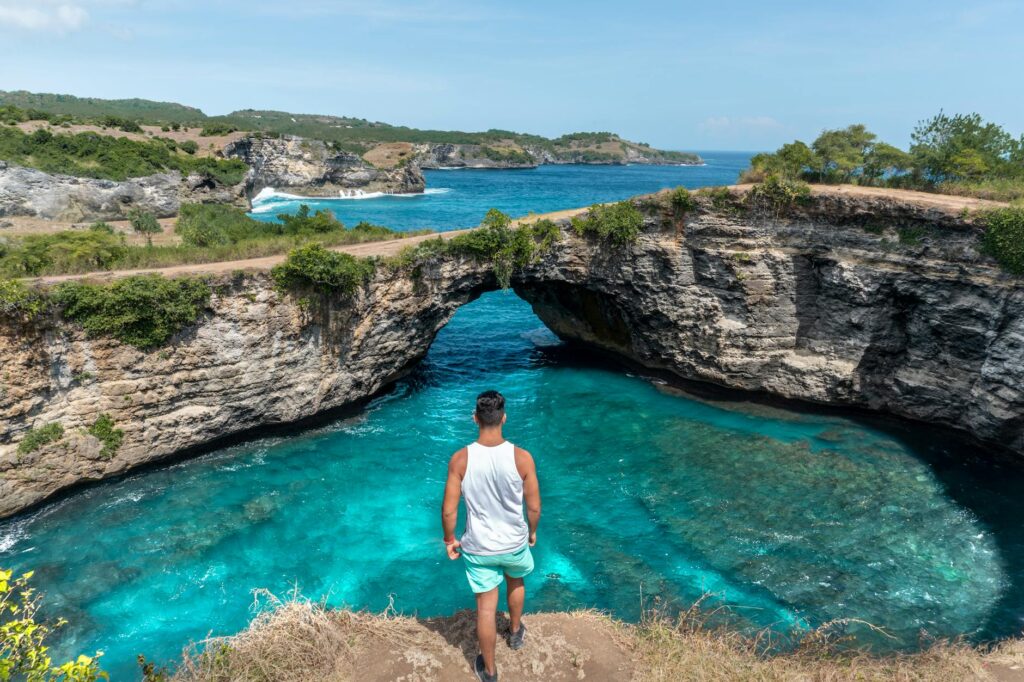
The undisputed king: Tristan da Cunha
If you look up “middle of nowhere” in the dictionary, you should find a picture of Tristan da Cunha. Seriously. This tiny volcanic archipelago in the South Atlantic is officially the most remote inhabited place on Earth. It’s a British Overseas Territory, but that’s just a formality. In reality, it’s its own universe.
Life in Edinburgh of the Seven Seas
The only settlement, fittingly named Edinburgh of the Seven Seas, is home to around 250 people, most of whom share just nine surnames. Think about that. It’s a town where everyone is literally family. The island sits 2,400 kilometers from the nearest inhabited land, Saint Helena, and over 2,800 kilometers from the coast of South Africa. There is no airport. No landing strip. The only way to reach it is by a fishing vessel or the rare expedition cruise from Cape Town, a journey that takes at least six days on rough seas.
Life here revolves around a communal, semi-socialist economy based primarily on fishing for the Tristan Rock Lobster, a delicacy exported to the US and Japan. Farming is also critical, with families tending to their own potato patches in a windswept field outside the village. There’s one school, one hospital, one post office, and one pub. It’s a life stripped down to its essentials, governed by a spirit of cooperation born from absolute necessity. When a roof needs fixing, the whole community turns out to help. That’s not just a nice gesture; it’s a survival mechanism.
A Story of Mutiny: The Pitcairn Islands
Journey to the vast Pacific, and you’ll find another contender for extreme isolation: Pitcairn Island. Its story is the stuff of legend, forever tied to the infamous 1789 Mutiny on the Bounty. After casting Captain Bligh adrift, Fletcher Christian and his fellow mutineers, along with their Tahitian companions, searched for a perfect hideaway. They found it in Pitcairn, an island so remote and incorrectly charted that they believed they’d never be found. They were right, for a while.
The World’s Smallest Democracy
Today, fewer than 50 people live on this 4.5-square-kilometer rock, making it the least populous national jurisdiction in the world. They are almost all direct descendants of the original mutineers and their Tahitian partners. This shared, dramatic history creates an unimaginably tight-knit, yet complex, social fabric. Their unique language, Pitkern, is a fascinating creole of 18th-century English and Tahitian.
- Accessibility: Like Tristan, there’s no airport. A supply ship from New Zealand makes the journey a few times a year, a 32-hour trip from Mangareva in French Polynesia, which itself is a flight away from Tahiti.
- Economy: The economy relies heavily on selling honey, intricate wood carvings, and coveted .pn domain names. Tourism is a growing but logistically challenging part of their income.
- Governance: The island is a self-governing British Overseas Territory. The mayor is elected from the tiny population, making it a true micro-democracy.
Living on Pitcairn means accepting a life where everything, from flour to fuel, comes from that quarterly supply ship. A delay in its arrival isn’t an inconvenience; it’s a genuine crisis.
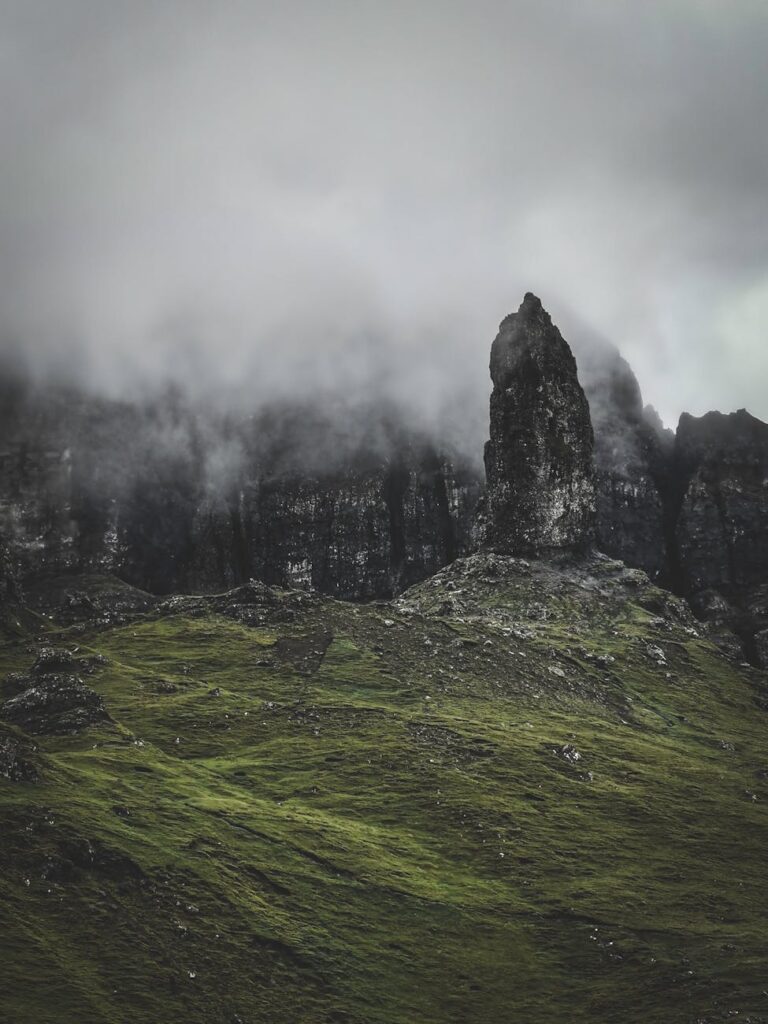
The Land of Stone Giants: Rapa Nui (Easter Island)
Rapa Nui is perhaps the most famous of the world’s remote inhabited islands, thanks to its enigmatic Moai statues. Located over 3,700 kilometers off the coast of Chile, it represents the southeasternmost point of the Polynesian Triangle. While it has a commercial airport (a legacy of a NASA project), making it far more accessible than Tristan or Pitcairn, its profound isolation has shaped every aspect of its history and culture.
A Story of Resilience and Mystery
The story of Rapa Nui is a powerful, cautionary tale. It’s believed a thriving Polynesian society once carved the nearly 900 Moai, a feat of engineering and artistry that boggles the mind. But something went wrong. A combination of internal conflict and ecological collapse—deforestation to transport the giant statues—led to the civilization’s downfall. It’s a lesson that resonates powerfully today.
The silence of the Moai, standing with their backs to the turbulent sea, is a constant reminder of both human ingenuity and our capacity for self-destruction. They don’t just represent the past; they are a warning for the future.
Today, the island is a province of Chile, and the Rapanui people are working hard to preserve their unique culture and language while navigating the challenges of modern tourism. Visiting Rapa Nui isn’t just a trip; it’s a pilgrimage to a place that feels suspended between a mythic past and a complicated present. You can feel the weight of history in the wind as it whips across the volcanic craters and along the lines of stoic, silent statues.
Napoleon’s Last Stand: Saint Helena
Another South Atlantic outpost, Saint Helena, was for centuries one of the most strategically important yet isolated islands in the world. It was a vital port of call for ships sailing to and from Europe and Asia before the Suez Canal. Its fame, however, was cemented when it was chosen as the place of exile for Napoleon Bonaparte, who died there in 1821. The British figured if it was secure enough for him, it was secure enough for anyone.
The Airport That Changed Everything
For nearly 500 years, the only way to reach St Helena was via the Royal Mail Ship, a five-night voyage from Cape Town. This defined life for the 4,500 residents, known as “Saints.” But in 2017, everything changed. After years of controversy and delays, an airport was finally opened. Suddenly, a five-day journey became a matter of hours from Johannesburg.
This has been a seismic shift for the island. It’s brought tourism and new opportunities but also challenges to the island’s unique, slow-paced culture. St Helena is a fascinating case study in how modern technology can instantly shrink a world that had been defined by its vastness for centuries. It’s still incredibly remote by any normal standard, but it’s no longer the near-impenetrable fortress it once was.
The Arctic Edge: Ittoqqortoormiit, Greenland
Not all remote inhabited islands are volcanic specks in temperate oceans. Head far north, to the east coast of Greenland, and you’ll find Ittoqqortoormiit. With a name that’s as hard to get to as the place itself, this settlement is one of the most isolated communities in the Arctic. Founded in 1925, it was a deliberate effort by Denmark to assert sovereignty in the region.
Life Among the Icebergs
The population of around 350 people lives in a world of breathtaking beauty and brutal harshness. For about nine months of the year, the sea is completely frozen over, making access by boat impossible. The only way in or out during this time is by helicopter to a nearby airstrip, and flights are frequently cancelled due to weather. The colorful houses stand in stark contrast to the white landscape of ice and snow.
This is a hunter’s world. The local economy and diet are still heavily reliant on hunting seals, narwhals, muskoxen, and polar bears. It’s a lifestyle deeply connected to the traditional Inuit way of life, a skill set passed down through generations. The challenges here aren’t just about supply ships; they’re about surviving the polar night, navigating shifting sea ice, and coexisting with some of the planet’s most formidable predators.
Conclusion
The allure of the world’s most remote inhabited islands is undeniable. They represent a fantasy of escape, a life simplified and disconnected from the chaos of our hyper-connected society. But the reality is far more complex. Life on these outposts is a testament to human resilience, cooperation, and the deep-seated need for community. The people of Tristan, Pitcairn, Rapa Nui, and beyond aren’t living in a fantasy; they are living in a delicate balance with nature, reliant on each other and the thin, tenuous supply lines that connect them to a world that often forgets they even exist. They remind us that for all our technology, there are still corners of the Earth where the rhythm of life is dictated not by notifications and deadlines, but by the turning of the tides and the arrival of a distant ship on the horizon.
FAQ
Can tourists actually visit these remote islands?
Yes, but it requires significant planning, time, and expense. Islands like Rapa Nui and St Helena are the most accessible due to their airports. For places like Tristan da Cunha and Pitcairn, you typically need to book passage on a rare expedition cruise or one of the few dedicated supply vessels, often more than a year in advance. You must also get permission from the island’s council before making travel arrangements.
What is the most difficult inhabited island to get to?
Tristan da Cunha is widely considered the most difficult to reach. It has no airport, and the only access is a 6-7 day boat journey from South Africa. The boat schedule is limited to just a handful of trips per year and is entirely dependent on the notoriously rough South Atlantic weather, so delays are common.


 Find Your Zen: The World’s Most Calming Hotel Lobbies
  Find the Best Train Carriages for Quiet & Scenic Views
  Hammock Reading: Finding Joy in Simple Pleasures
  Create a Sensory Souvenir: Remember Your Trip Forever
  The Calming Colors of a Santorini Sunset Explained
  Discover the World’s Best Planetariums: A Guide
  Backtest Crypto Trading Strategies: A Complete Guide
  NFT Standards: A Cross-Chain Guide for Creators & Collectors
  Decentralized Storage: IPFS & Arweave Explained Simply
  How to Calculate Cryptocurrency Taxes: A Simple Guide
  Your Guide to Music NFTs & Top Platforms for 2024
  TradingView for Crypto: The Ultimate Trader’s Guide