

 MMM
MMM The Art of Listening to a City’s Soundscape
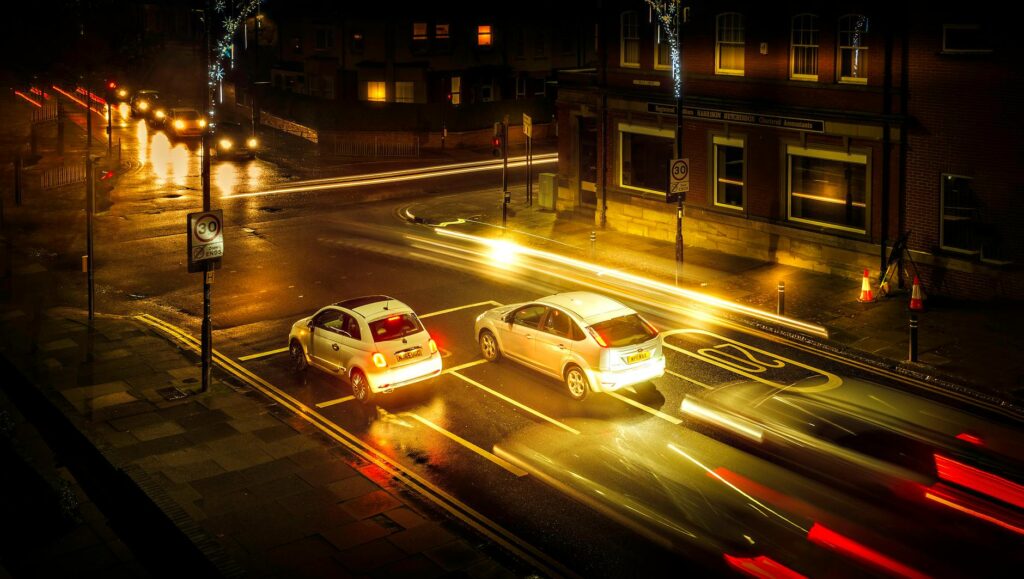
Stop for a moment. Right now. What do you hear? Maybe it’s the low hum of your computer, the distant drone of traffic, the faint chatter from another room. We are constantly swimming in an ocean of sound, yet most of the time, we’ve trained ourselves to tune it all out. It’s just noise, right? The background static of modern life. But what if it wasn’t? What if that ‘noise’ was actually a complex, layered, and deeply informative symphony? Learning the art of listening to a city’s soundscape is like learning a new language—one that tells you the true story of a place, its people, and its rhythm.
Most of us walk through our urban environments with our ears turned off, filtering out everything but the essentials: the approaching car, the direct question, the podcast streaming through our earbuds. We see the city, but we don’t truly hear it. This guide is about changing that. It’s an invitation to take off the headphones, to pause, and to tune into the incredible acoustic world that’s been playing all around you, unheard.

Key Takeaways
- A city’s soundscape is more than just noise; it’s a complex auditory environment composed of unique sounds (soundmarks), background hums (keynotes), and informational signals.
- Actively listening to your surroundings is a powerful form of mindfulness that can reduce stress and anchor you in the present moment.
- Understanding a city’s soundscape provides a deeper, more authentic connection to the place, revealing cultural habits, economic activity, and social patterns.
- You don’t need any special equipment to start—just your ears and a little bit of intentional curiosity.
What Exactly *Is* a City’s Soundscape?
The term “soundscape” was popularized by composer and environmentalist R. Murray Schafer. He defined it as the total collection of sounds that can be heard in a specific location. It’s the auditory equivalent of a landscape. It’s not about good sounds or bad sounds (noise). It’s about all sounds. Schafer broke it down into three fascinating categories, which you can start to identify anywhere.
Keynote Sounds
Think of this as the background score of a place. It’s the sound that’s so pervasive you often don’t even notice it until it’s gone. In many cities, the keynote sound is the constant, low-frequency roar of traffic. It might be the hum of air conditioning units in a hot climate, or the gentle lapping of water against the canals in Venice. It’s the sonic canvas upon which all other sounds are painted. It’s not something you’re meant to listen *to*; it’s something you listen *from*.
Sound Signals
These are the sounds in the foreground. They are the ones we’re consciously listening for because they carry information. Think of police sirens, church bells ringing on the hour, the ding of a tram arriving, a pedestrian crossing signal, or a person calling your name. These are the sounds that demand our attention and often require a response. They are the dialogue of the city, directing its flow and activity.
Soundmarks
This is where it gets really interesting. A soundmark is the acoustic equivalent of a landmark. It’s a sound that is unique and special to a particular place. It’s the sound people would miss if it were gone. The clang of San Francisco’s cable cars. The specific three-note chime of the Paris Metro. The call to prayer echoing through the streets of Istanbul. These are sounds that define the acoustic identity of a community. They are sonic treasures. Finding a city’s soundmarks is like finding its hidden gems, the ones that tell you you’re here, and nowhere else.
Why You Should Bother Listening
Okay, so it’s a neat concept. But in a world where we’re already overloaded with information, why add another layer of sensory input? The benefits are surprisingly profound, touching on everything from mental health to travel experiences.
First and foremost, it’s a form of active meditation. It’s mindfulness for people who can’t sit still. Focusing intently on the sounds around you—separating them, identifying them, considering them without judgment—pulls your mind away from the endless chatter of internal anxieties and to-do lists. It grounds you firmly in the present moment and in your physical location. It’s an incredibly simple yet effective way to de-stress. You just stop, and you listen. That’s it.
When you travel, listening to a city’s soundscape offers a much deeper connection than just seeing the sights. You can learn so much. The pace of the languages spoken on the street tells you about the culture’s energy. The types of vehicle sounds tell you about its economy and infrastructure. The sounds of children playing in a park versus the quiet reverence around a historical monument tell you about a community’s values. You start to understand a place from the inside out, absorbing its character through your ears. It’s the difference between looking at a photograph of a place and actually being there.
A Practical Guide to Listening to a City’s Soundscape
Ready to try it? The beauty of this practice is its simplicity. There are no rules, and you can’t get it wrong. But here are a few pointers to get you started on your first “soundwalk.”
Finding Your Listening Spot
You can do this literally anywhere, but some spots are better than others for a first attempt. Look for a place with a rich variety of sounds where you can sit or stand comfortably for 5-10 minutes without being disturbed. A park bench overlooking a moderately busy street is perfect. A seat at a sidewalk cafe. A public square. Even your own apartment window offers a complex world of sound.
The Tools (Or Lack Thereof)
The only tool you truly need is a pair of open ears. That’s it. Forget about fancy recording equipment for now. The goal is to train your brain to listen, not to capture a perfect audio file. In fact, the lack of technology is part of the appeal—it’s a digital detox. If you want to take notes, a small notebook and pen can be helpful for jotting down what you hear and how it makes you feel.
A Step-by-Step Listening Exercise
Once you’ve found your spot, try this simple exercise:
- Settle In: Get comfortable and close your eyes, if you feel safe and comfortable doing so. Closing your eyes dramatically heightens your sense of hearing, removing visual distractions.
- Listen to the Closest Sound: For 30 seconds, focus only on the sound that is physically closest to you. Is it the sound of your own breathing? The rustle of your jacket? The squeak of the bench? Isolate it.
- Listen to the Farthest Sound: Now, shift your focus. Strain your ears to identify the most distant sound you can perceive. A far-off siren? The faint drone of an airplane? A train on a distant track? Hold your attention there.
- Scan the Layers: Now, open up your listening to everything in between. Try to identify as many individual sounds as you can. Don’t just hear ‘traffic’—try to hear the whine of a specific motorcycle, the rumble of a bus, the hiss of tires on wet pavement. Don’t just hear ‘people’—hear the staccato of high heels, the low murmur of a conversation, a sudden laugh.
- Notice the Rhythm: Is there a pattern? A pulse? Does the pedestrian crossing signal create a beat? Does the traffic flow in waves? The city has its own rhythm section. Find it.
Decoding What You Hear
As you listen, think about the story these sounds are telling. This isn’t about analysis; it’s about curiosity. Here are some things to listen for:
- Human Sounds: Are the voices fast-paced and urgent, or relaxed and meandering? Are you hearing multiple languages? Laughter? Shouting? The sound of human voices tells you about the social fabric of the area.
- Mechanical Sounds: What kind of technology is present? The roar of industry? The whir of electric bikes? The clatter of a construction site? These sounds speak to the city’s economic life and its state of development.
- Natural Sounds: Even in the most concrete of jungles, nature makes its voice heard. Listen for the chirping of sparrows, the rustle of wind in the trees of a small park, the sound of rain on an awning. These sounds provide a soft counterpoint to the city’s harder edges.
- Silence: Perhaps most powerfully, listen for the gaps. What isn’t there? The moments of quiet between the departure and arrival of a subway train. The brief lull in traffic at a red light. These pockets of near-silence can be the most profound parts of a city’s soundscape.
The Soundscapes of the World
Every city has a unique sonic fingerprint, a signature tune composed of its own keynotes, signals, and soundmarks. Once you start listening, you realize that New York doesn’t sound anything like Rome, which sounds nothing like Tokyo.
Think of Tokyo. The soundscape is often one of polite, ordered density. You hear the electronic jingles at train crossings, the polite announcements on the immaculate subway, the shuffling of thousands of feet moving in unison at Shibuya Crossing, and the ubiquitous, cheerful “Irasshaimase!” welcome call from shops and restaurants. It’s a symphony of efficient, high-tech humanity.
Now, transport yourself to a piazza in Rome. The keynote is different. It’s a warm, chaotic hum of overlapping conversations in a dozen languages, punctuated by the clatter of ceramic espresso cups on saucers, the theatrical roar of a Vespa scooter, and the ever-present, ancient sound of water splashing in a baroque fountain. It sounds historic, passionate, and gloriously inefficient.
“Sounds have a profound link to memory, more primal than sight. A specific sound can transport you back to a place and a feeling with a startling, immediate clarity that a photograph rarely can. The sound of a city is the memory of it, still alive.”
Even within a single city, the soundscape can change dramatically from one neighborhood to the next. The financial district at 9 AM sounds completely different from a residential neighborhood at dusk. A market street sounds different from a museum quarter. Exploring a city with your ears is a way of discovering its many different villages and their unique identities.
Conclusion
So, next time you step outside, I challenge you to do something radical. Leave the headphones in your pocket. For just five minutes of your walk, turn off the podcast, pause the music, and just listen. Don’t judge, don’t analyze, don’t even try too hard. Just allow the sounds of your city to wash over you.
You might be surprised by what you discover. You might find a new appreciation for the complex, frustrating, beautiful place you call home. You might find a moment of peace in the middle of chaos. You’ll be tapping into a hidden layer of reality, one that has been there all along, waiting for you to tune in. The city is playing its symphony. All you have to do is listen.
FAQ
What is the difference between noise and a soundscape?
Noise is typically defined as unwanted or unpleasant sound. A soundscape, on the other hand, is a neutral term that encompasses all sounds within an environment, without judging them as ‘good’ or ‘bad’. The goal of listening to a soundscape is to observe the entire auditory picture, including sounds you might typically label as noise, to understand the environment more completely.
Do I need special equipment to listen to a city’s soundscape?
Absolutely not. The most powerful tools you have are your own two ears and your focused attention. While some enthusiasts, known as field recordists, use high-quality microphones to capture soundscapes, the fundamental practice of deep listening requires nothing more than a willingness to be present and pay attention to your surroundings.
How can I practice this if my city is extremely loud and overwhelming?
If the overall sound level is too much, try finding ‘acoustic refuges’. These are smaller pockets of relative quiet, like a small park, a courtyard, a library, or a church. You can also practice for shorter periods—just 60 seconds at a time. The goal isn’t to love every sound; it’s to notice them. Sometimes, acknowledging the overwhelming nature of the sound is the practice itself.


 Find Your Zen: The World’s Most Calming Hotel Lobbies
  Find the Best Train Carriages for Quiet & Scenic Views
  Hammock Reading: Finding Joy in Simple Pleasures
  Create a Sensory Souvenir: Remember Your Trip Forever
  The Calming Colors of a Santorini Sunset Explained
  Discover the World’s Best Planetariums: A Guide
  Backtest Crypto Trading Strategies: A Complete Guide
  NFT Standards: A Cross-Chain Guide for Creators & Collectors
  Decentralized Storage: IPFS & Arweave Explained Simply
  How to Calculate Cryptocurrency Taxes: A Simple Guide
  Your Guide to Music NFTs & Top Platforms for 2024
  TradingView for Crypto: The Ultimate Trader’s Guide