

10 Emerging Technology Trends Shaping the Future in 2026
- 10 Emerging Technology Trends Shaping the Future in 2026
- Artificial Intelligence and Machine Learning Evolution
- The Metaverse and Extended Reality (XR) Integration
- Advanced Robotics and Automation
- Sustainable Technologies and Green Innovation
- Quantum Computing's Practical Applications Emerge
- The Rise of Edge Computing
- Biotechnology and Genomics Advancements
- Decentralized Technologies and Blockchain's Evolution
- Advanced Connectivity: 5G and Beyond
- Cybersecurity Evolution in a Digital Age
The year is 2026, and the landscape of innovation is rapidly transforming. We are witnessing firsthand the impact of 10 emerging technology trends shaping our world, from how we work and communicate to how we live and solve complex global challenges. These advancements are not distant possibilities but present realities, accelerating at an unprecedented pace. Understanding these trends is crucial for individuals and organizations aiming to thrive in the coming years.
The pace of technological evolution continues to accelerate, pushing the boundaries of what was once considered science fiction into tangible applications. Staying ahead requires a keen awareness of these transformative forces. This article will explore the most significant emerging technologies that are poised to redefine industries and everyday life by 2026.
Artificial Intelligence and Machine Learning Evolution
Artificial intelligence (AI) and machine learning (ML) are no longer nascent concepts; they are foundational pillars of modern innovation. In 2026, AI is becoming even more sophisticated, moving beyond simple automation to perform complex decision-making and creative tasks. Generative AI models are producing highly realistic content, driving breakthroughs in fields like drug discovery and personalized education.
Machine learning algorithms are being trained on vaster datasets, leading to more accurate predictions and hyper-personalized user experiences. These advancements are powering everything from autonomous vehicles to sophisticated cybersecurity systems. The ethical implications and the need for robust AI governance are also becoming paramount as AI integration deepens.
AI in Everyday Life
AI’s presence is increasingly pervasive, from smart home devices that anticipate our needs to personalized news feeds and recommendations. These technologies are designed to simplify tasks and enhance convenience.
AI in Industry
Industries are leveraging AI for predictive maintenance, supply chain optimization, and enhanced customer service. The ability of AI to analyze massive amounts of data in real-time is revolutionizing operational efficiency.
The Metaverse and Extended Reality (XR) Integration
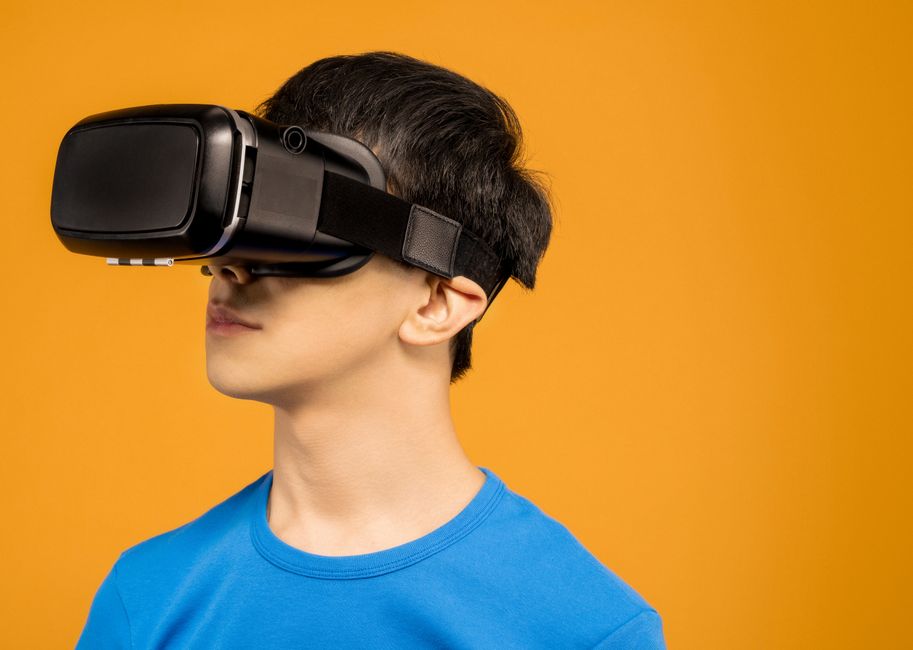
The metaverse, once a buzzword, is evolving into a persistent, interconnected set of virtual spaces where users can interact, work, and play. In 2026, extended reality (XR), encompassing virtual reality (VR), augmented reality (AR), and mixed reality (MR), is the key enabler of this immersive digital evolution.
XR technologies are breaking down geographical barriers, enabling remote collaboration that feels more present and engaging than traditional video conferencing. Businesses are exploring the metaverse for training simulations, virtual product showrooms, and new forms of customer engagement. The convergence of physical and digital realities is blurring lines.
Immersive Work Environments
XR is transforming remote work, allowing for virtual offices and collaborative spaces that mimic in-person interactions. This fosters a greater sense of team cohesion and productivity for distributed workforces.
Virtual Commerce and Entertainment
The metaverse is opening new avenues for e-commerce, allowing users to virtually try on clothes or explore digital storefronts. Entertainment is also being redefined with immersive gaming experiences and virtual concerts.
Advanced Robotics and Automation
Robotics is witnessing a significant leap forward, with robots becoming more adaptable, intelligent, and collaborative. In 2026, advanced robots are increasingly integrated into manufacturing, logistics, healthcare, and even our homes. These machines are capable of performing intricate tasks with precision and speed.
Automation is extending beyond repetitive factory jobs to complex services. From surgical robots assisting in delicate operations to delivery drones navigating urban environments, the applications are vast. The focus is shifting towards human-robot collaboration, where robots augment human capabilities.
Cobots in Manufacturing
Collaborative robots, or cobots, are designed to work alongside humans, enhancing safety and efficiency on the factory floor. They are taking on dangerous or physically demanding tasks.
Autonomous Systems
Beyond vehicles, autonomous systems are being deployed for infrastructure inspection, agricultural management, and emergency response. These systems operate with minimal human intervention.

Sustainable Technologies and Green Innovation
The urgent need to address climate change is driving innovation in sustainable technologies. By 2026, green tech is not just an environmental consideration but a significant economic driver. This includes advancements in renewable energy, energy storage, and circular economy models.
Technologies like advanced solar panels, more efficient battery storage solutions, and green hydrogen production are becoming mainstream. Companies are investing heavily in carbon capture and utilization technologies. The circular economy, focused on reducing waste and maximizing resource reuse, is gaining traction.
Renewable Energy Advancements
Next-generation solar, wind, and geothermal energy solutions are becoming more affordable and accessible. This is crucial for decarbonizing the global energy supply.
Smart Grid and Energy Management
Intelligent grids are optimizing energy distribution and consumption, reducing waste and improving reliability. This is essential for integrating intermittent renewable sources.
Quantum Computing’s Practical Applications Emerge
Quantum computing, once a theoretical marvel, is beginning to yield practical applications. In 2026, quantum computers are starting to solve problems that are intractable for even the most powerful classical supercomputers. These include complex simulations for drug development, materials science, and financial modeling.
While widespread adoption is still some way off, early-stage quantum computing solutions are proving invaluable for research and development. The potential to revolutionize areas like cryptography and AI is immense, prompting significant investment.
Drug Discovery and Materials Science
Quantum simulations can accurately model molecular interactions, accelerating the discovery of new medicines and advanced materials. This could lead to breakthroughs in healthcare and industry.
Optimization Problems
Quantum algorithms are adept at solving complex optimization challenges, with applications in logistics, financial portfolio management, and traffic flow optimization. This leads to significant efficiency gains.

The Rise of Edge Computing
Edge computing moves data processing closer to the source of data generation, reducing latency and improving efficiency. In 2026, edge computing is critical for enabling real-time applications in areas like IoT, autonomous vehicles, and smart cities. Instead of sending all data to a central cloud, processing happens locally.
This distributed approach enhances security and privacy by processing sensitive data at the edge. It also reduces bandwidth requirements, making it more cost-effective for many applications. The proliferation of IoT devices fuels the demand for edge computing solutions.
IoT Data Processing
With billions of IoT devices generating data, edge computing allows for immediate analysis and action, enabling smarter devices and systems. This is key for industrial IoT and smart homes.
Low-Latency Applications
Real-time applications like autonomous driving, industrial automation, and augmented reality demand the low latency that edge computing provides. It ensures immediate responsiveness.
Biotechnology and Genomics Advancements
Biotechnology continues to be a frontier of innovation, with genomics and personalized medicine leading the charge. By 2026, advancements in gene editing technologies like CRISPR are enabling new therapeutic approaches for genetic diseases. Personalized treatments tailored to an individual’s genetic makeup are becoming more common.
The ability to map and understand genomes is revolutionizing diagnostics and preventative healthcare. Beyond human health, biotechnology is also driving progress in sustainable agriculture and bio-based materials. The ethical considerations surrounding genetic modifications are a key area of discussion.
Personalized Medicine
Genomic sequencing is informing tailored treatment plans for diseases like cancer, improving efficacy and reducing side effects. This represents a paradigm shift in healthcare.
CRISPR and Gene Therapy
Gene editing tools are offering hope for treating inherited disorders by correcting the underlying genetic defects. This field holds immense therapeutic potential.

Decentralized Technologies and Blockchain’s Evolution
Decentralized technologies, with blockchain at their core, are moving beyond cryptocurrencies. In 2026, blockchain is being explored for supply chain management, digital identity verification, and secure data sharing. The promise of transparency, security, and immutability is driving adoption.
Decentralized autonomous organizations (DAOs) are emerging as new models for governance and collaboration. The focus is on empowering individuals and creating more resilient systems. While challenges remain, the potential for disrupting traditional centralized models is significant.
Supply Chain Transparency
Blockchain can provide an immutable ledger for tracking goods from origin to consumer, enhancing trust and reducing fraud. This is vital for global trade.
Digital Identity Solutions
Secure and verifiable digital identities built on blockchain technology can give individuals more control over their personal data. This addresses privacy concerns.
Advanced Connectivity: 5G and Beyond
The rollout and refinement of 5G technology are enabling a new era of connectivity. In 2026, 5G’s high speeds and low latency are foundational for many of the other emerging trends, from AI-powered applications to the metaverse. This advanced connectivity underpins the real-time data exchange required for these technologies to function optimally.
As 5G becomes more ubiquitous, we will see a surge in innovation leveraging its capabilities. Research into 6G is already underway, promising even greater bandwidth and new possibilities for communication and interaction.
Enabling IoT at Scale
5G’s capacity is essential for connecting the vast number of devices in the Internet of Things. This fuels the growth of smart cities and industrial automation.
Enhanced Mobile Experiences
Faster downloads, smoother streaming, and more responsive online gaming are just some of the benefits users are experiencing with 5G. It elevates mobile utility.
Cybersecurity Evolution in a Digital Age
As technology advances, so do the threats. Cybersecurity is evolving rapidly to protect against sophisticated attacks. In 2026, artificial intelligence and machine learning are playing a crucial role in detecting and responding to threats in real-time. Zero-trust security models are becoming standard practice.
The increasing volume of sensitive data being generated and stored necessitates robust security measures. Advances in encryption, threat intelligence, and proactive defense mechanisms are key. The focus is on building resilient systems that can withstand and recover from cyber incidents.
AI-Powered Threat Detection
Machine learning algorithms can identify anomalous patterns indicative of cyber threats faster than traditional methods. This proactive approach is essential.
Zero-Trust Architecture
This security model assumes no user or device can be trusted by default, requiring strict verification for every access request. It strengthens defenses significantly.
These 10 emerging technology trends shaping our future are interconnected and mutually reinforcing. Their collective impact promises a future that is more connected, intelligent, and efficient, while also presenting new challenges that require thoughtful consideration and proactive solutions. Navigating this evolving landscape requires continuous learning and adaptation.

