

 MMM
MMM Turn Your Passion into Profit: The Ultimate Guide on How to Make Money on Etsy from Home
Let’s be real. The idea of ditching the commute, being your own boss, and creating things you love for a living sounds like a dream. For millions of people, Etsy has turned that dream into a reality. But you’ve probably wondered, sitting there with a great idea, “Can I actually make money on Etsy? Is it too saturated? Too complicated?” The short answer is a resounding YES, you absolutely can. The longer answer is that it takes more than just listing a pretty item and hoping for the best. It takes strategy, a bit of grit, and the right knowledge.
Forget the idea that you missed the boat. The world of e-commerce and the desire for unique, handcrafted, and personalized items is bigger than ever. People are actively seeking out small businesses to support. That’s you. You’re the person they’re looking for. This guide isn’t about vague encouragement; it’s a no-fluff, actionable blueprint packed with 10 tips to help you start, grow, and actually profit from your home-based Etsy shop.
Key Takeaways
- Niche is Everything: Specificity sells. Don’t be a general store; be a specialist.
- Photos are Your Sales Team: High-quality, well-lit product photos are non-negotiable for online sales.
- Understand Etsy SEO: Help buyers find you by thinking like them and using keywords in your titles, tags, and descriptions.
- Price for Profit: Don’t just cover your costs. Factor in your time, fees, and a real profit margin to build a sustainable business.
- Marketing is a Must: Don’t rely solely on Etsy’s traffic. Promote your shop on social media to build a brand and drive your own customers.
Tip 1: Niche Down, Then Niche Down Again
This is the single most important piece of advice for new sellers. When you try to sell to everyone, you end up selling to no one. Think about it. If you’re looking for a specific gift, say a leather bookmark for your dad who loves fantasy novels, are you going to browse a shop that sells t-shirts, mugs, and a few random bookmarks? Or are you going to click on the shop called “The Dragon’s Hoard Leathercrafts” that specializes in fantasy-themed leather goods? You’re going to the specialist every time.
“Niche-ing down” means getting super specific. Let’s break it down:
- Broad Category: Jewelry
- Niche: Beaded Jewelry
- Micro-Niche: Beaded jewelry using ethically sourced gemstones.
- Hyper-Niche: Dainty, minimalist beaded birthstone necklaces for new moms.
See the difference? The last one paints a clear picture. You know exactly who the customer is and what they want. It makes your marketing easier, your product development focused, and your shop memorable. Don’t be afraid that being specific will limit your customers. It won’t. It will attract the right customers—the ones who are far more likely to buy.
Tip 2: Your Photos are Your Most Valuable Asset
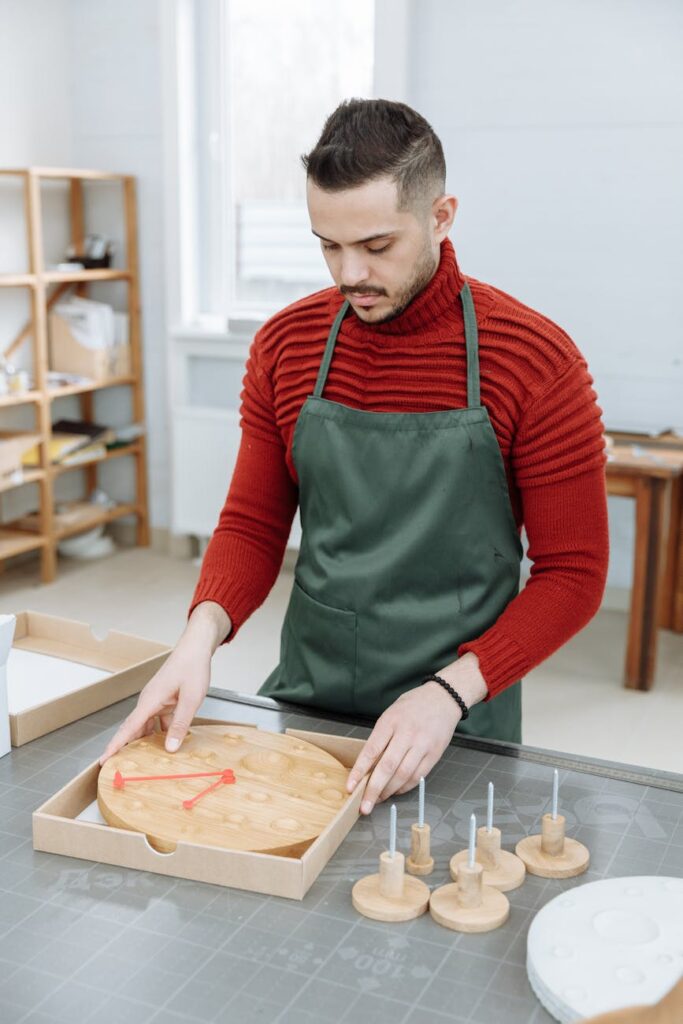
On Etsy, your photos do all the talking. A customer can’t touch your product, feel its weight, or see the fine details in person. Your photography has to do all that heavy lifting. Blurry, dark, or cluttered photos will kill your sales, even if your product is amazing. You don’t need a fancy DSLR camera to start; modern smartphone cameras are incredibly powerful.
What you DO need:
- Good, Natural Light: This is the secret sauce. Find a spot near a large window. Overcast days are actually perfect because they provide soft, diffused light that minimizes harsh shadows. Avoid direct, harsh sunlight.
- A Clean, Simple Background: A white poster board, a piece of wood, a clean marble countertop, or a textured piece of fabric can work wonders. The focus should be on your product, not the clutter in your living room.
- Multiple Angles: Show your product from every conceivable angle. Front, back, side, top, close-up on details. If it’s wearable, show it being worn. If it’s decor, show it in a room. Use all 10 photo slots Etsy gives you!
- Lifestyle Shots: These are photos that show your product in use. A coffee mug being held, a print hanging on a wall, a necklace on a person. It helps the buyer imagine the product in their own life.
Invest time in learning basic photo editing. You can use free apps like Snapseed or Canva to brighten images, crop them, and make the colors pop. Your photos are your virtual storefront. Make them irresistible.
Tip 3: Master Etsy SEO (It’s Not as Scary as It Sounds)
SEO stands for Search Engine Optimization. In the Etsy universe, it’s just the process of helping the right customers find your products. When a buyer types “rustic farmhouse sign” into the Etsy search bar, Etsy’s algorithm scans millions of listings to find the best match. Your job is to tell the algorithm, “Hey! Over here! My product is a perfect match!”
How do you do that? With keywords. Keywords are the search terms your ideal customer is using.
The Holy Trinity of Etsy SEO:
- Titles: Your title should be descriptive and packed with strong keywords. Don’t just call it “Wooden Sign.” Call it “Rustic Farmhouse Entryway Sign | Personalized Last Name Decor | Custom Wooden Family Sign.” Think like a buyer. What words would you use to find this item?
- Tags: You get 13 tags. Use all of them. These are your secret weapons. Think of synonyms and related phrases. For our sign example, tags could include: “housewarming gift,” “gallery wall art,” “custom wood sign,” “new home gift,” “modern farmhouse,” “family name plaque,” and so on. Use multi-word phrases (long-tail keywords) as they are more specific and often have less competition.
- Attributes & Categories: When you list an item, Etsy asks for details like color, size, style, occasion, etc. Fill these out completely! They act as powerful filters for buyers and help you show up in more specific searches.
The best way to find keywords is to put yourself in your customer’s shoes and use the Etsy search bar. Type in a basic description of your product and see what auto-populates. Those are real terms people are searching for!
Tip 4: Price for Profit, Not Just to Compete
This is where so many talented creators go wrong. They look at their competitors, pick a price that’s a little lower, and call it a day. This is a race to the bottom that you will never win. You MUST price for profit to have a sustainable business. If you’re not making money, it’s a hobby, not a business.
“Pricing your work is one of the hardest parts of running a creative business. But undervaluing your art doesn’t just hurt you; it hurts the entire community of makers by devaluing handmade goods as a whole.”
A basic formula to get you started is:
(Cost of Supplies + Your Time) x 2 = Wholesale Price
Wholesale Price x 2 = Retail Price
Let’s break that down. Your time is valuable. Pay yourself a fair hourly wage. If a product takes you two hours to make and you want to pay yourself $20/hour, that’s $40 right there. The final formula should also account for fees, overhead (like shipping supplies, software), and your desired profit margin. Don’t be afraid to charge what you’re worth. The right customers will appreciate the quality and craftsmanship and will be happy to pay for it.
Tip 5: Build a Brand, Not Just a Shop
What’s the difference between a memorable shop and a forgettable one? Branding. Branding is the entire experience you create for your customer. It’s the feeling they get when they see your products, read your descriptions, and open your package. It’s what makes them a repeat customer and a raving fan.
Elements of a strong brand experience include:
- A Cohesive Look: Use similar colors, fonts, and photography styles across your shop banner, logo, and listings. It should look professional and unified.
- Your Shop Story: Use your “About” section to tell people who you are. Why did you start your shop? What’s your passion? People connect with stories, not faceless businesses.
- Packaging: This is a massive opportunity to delight your customer. It doesn’t have to be expensive. A handwritten thank-you note, some branded tissue paper, a custom sticker on the box—these small touches make the unboxing experience special and memorable.
Tip 6: Offer Customer Service That Wows
In a world of automated responses and chatbots, genuine human connection stands out. Stellar customer service is your secret marketing tool. A happy customer will leave a glowing review (which is social proof for future buyers) and tell their friends about your shop.
Be prompt in replying to messages (the Etsy Seller app helps with this). Be friendly, helpful, and professional, even if a customer is difficult. If a mistake happens—an item arrives damaged or a package is delayed—own it. Communicate clearly and offer a solution. How you handle problems is often more memorable than the problem itself. A great recovery can turn a disgruntled customer into a loyal advocate for your brand.
Tip 7: Consider Digital Products for Passive Income
Not everything you sell has to be a physical object that you pack and ship. Digital products are a fantastic way to make money on Etsy with significantly less ongoing effort. You create the product once, list it, and it can be sold an infinite number of times without you lifting a finger.
Popular Digital Product Ideas:
- Digital Planners & Journal Pages
- Printable Wall Art
- Social Media Templates (for Canva, etc.)
- Resume Templates
- E-book or Recipe Book PDFs
- Sewing Patterns or Crafting Tutorials
- Customizable Invitation Templates
The beauty of digital products is the high-profit margin (no material or shipping costs!) and the ability to build a stream of passive income. It can be a great way to supplement the revenue from your physical products or even become the main focus of your shop.

Tip 8: Market Your Shop Beyond Etsy’s Walls
While Etsy’s built-in marketplace is powerful, you can’t rely on it alone. The most successful sellers drive their own traffic to their shops. Think of yourself as the CEO of your own little company. You need a marketing department, and right now, that’s you!
Pick one or two social media platforms where your ideal customer hangs out and go all-in there. Don’t try to be everywhere at once.
- Pinterest: This is a visual search engine and an absolute goldmine for Etsy sellers. Create beautiful pins for each of your products that link directly back to the Etsy listing. Focus on great photography and keyword-rich descriptions.
- Instagram: Perfect for showing off your products with beautiful photos and videos (Reels). Use it to share behind-the-scenes content of your creative process. People love seeing how things are made!
- TikTok: The home of short-form video. Packing videos, process videos, and showing off the finished product can go viral and send a flood of traffic to your shop.
The key is to provide value and build a community, not just constantly post “Buy my stuff!” Share your story, show your workspace, and let people get to know the person behind the products.
Tip 9: Understand and Track Your Fees
Nobody likes hidden surprises, especially when it comes to money. To truly be profitable, you need to have a crystal-clear understanding of Etsy’s fee structure. It can seem confusing at first, but it’s essential.
The Main Fees to Know:
- Listing Fee: A flat fee (e.g., $0.20 USD) for each item you list, which lasts for four months or until the item sells.
- Transaction Fee: A percentage of the total sale price (including shipping and gift wrapping).
- Payment Processing Fee: A fee for processing the payment, which is a small percentage of the total sale plus a flat fee. This varies by country.
- Offsite Ads Fee: If you make over a certain threshold in sales per year, Etsy enrolls you in their Offsite Ads program. If a sale comes from one of these ads, they take a higher percentage. This is important to factor into your pricing.
Keep a simple spreadsheet to track your revenue and expenses. Knowing your numbers is the difference between running a business and just having an expensive hobby.
Tip 10: Analyze Your Stats and Be Willing to Adapt
Your Etsy Stats dashboard is your best friend. It’s a treasure trove of data that tells you exactly what’s working and what isn’t. Don’t ignore it!
Check your stats regularly and ask yourself these questions:
- Which listings are getting the most views and visits? Can you create more products like them?
- What search terms are people using to find your shop? Can you incorporate those keywords into other listings?
- Where is your traffic coming from? Is it Etsy search, social media, or somewhere else? This tells you where to focus your marketing efforts.
Business is all about experimenting. Don’t be afraid to tweak a title, change out a main photo, or try a new product line. Use the data from your stats to make informed decisions, not just guesses. The ability to adapt and evolve is what will keep your shop thriving for years to come.
Conclusion
There you have it—10 solid, actionable tips for how to make money on Etsy. It’s not a get-rich-quick scheme. It’s a journey that requires passion, patience, and a willingness to learn. It’s about building something you can be proud of, one listing, one sale, one happy customer at a time. The potential is there, waiting for you. Stop wondering ‘what if’ and start creating. Your future customers are waiting to discover you.


 Start a YouTube Automation Channel (Beginner’s Guide)
  Start a YouTube Automation Channel (Beginner’s Guide)
  High-Paying Online Tutoring Jobs: A Step-by-Step Guide
  High-Paying Online Tutoring Jobs: A Step-by-Step Guide
  Get Paid for Online Surveys: A 2024 Guide
  15 Best Sites for Online Data Entry Jobs (2024 Guide)
  Backtest Crypto Trading Strategies: A Complete Guide
  NFT Standards: A Cross-Chain Guide for Creators & Collectors
  Decentralized Storage: IPFS & Arweave Explained Simply
  How to Calculate Cryptocurrency Taxes: A Simple Guide
  Your Guide to Music NFTs & Top Platforms for 2024
  TradingView for Crypto: The Ultimate Trader’s Guide