

 MMM
MMM You’re using advanced AI right now. You just don’t know it.
Think about the last time you used your phone. Did you ask Siri for the weather? Did you see Google finish your search query before you were done typing? Maybe your email app automatically sorted a pesky sales pitch into the spam folder. If you did any of those things, you’ve been interacting with some of the most common natural language processing applications shaping our digital lives. It’s not science fiction anymore; it’s the silent, intelligent engine running in the background of so many tools we take for granted.
Natural Language Processing, or NLP, is a fascinating field of artificial intelligence (AI) that’s all about teaching computers to understand, interpret, and generate human language. It’s the bridge between our messy, nuanced, and often sarcastic way of communicating and the rigid, logical world of computer code. It’s incredibly complex. But the results? They feel like magic.
Key Takeaways
- NLP is Everywhere: You interact with Natural Language Processing applications daily through virtual assistants, search engines, and email filters.
- Two Sides of the Coin: NLP involves both Natural Language Understanding (NLU) to read and interpret text, and Natural Language Generation (NLG) to write and create human-like text.
- Major Use Cases: Key applications include machine translation, sentiment analysis, chatbots, and speech recognition.
- Constantly Evolving: The field is rapidly advancing, leading to more sophisticated and nuanced applications in industries like healthcare and finance.
So, What Exactly is Natural Language Processing?
Let’s break it down a bit more. At its core, NLP is about closing the communication gap. Humans don’t speak in 1s and 0s. We use slang, we have regional dialects, we make typos, and we imply meaning without saying it directly. A computer, by default, understands none of this. It sees a sentence as just a string of characters. NLP gives it the tools to see more.
Think of it like teaching someone a new language, but that person is a computer. You have to start with the absolute basics.
- Syntax: The grammar and structure of sentences. Is this a noun or a verb? Does the sentence structure make sense?
- Semantics: The meaning behind the words. Understanding that “run” can mean a physical action, a tear in a stocking, or a political campaign.
- Context: The surrounding information that gives words their true meaning. The word “bank” means something very different if you’re talking about fishing versus finance.
NLP combines computational linguistics—the rule-based modeling of human language—with powerful statistical, machine learning, and deep learning models. Together, these technologies empower computers to process our language in all its forms, from text to speech, and to complete a huge range of tasks.

The Top Natural Language Processing Applications We See Every Day
Okay, enough with the theory. The best way to understand NLP is to see it in action. You’d be shocked at how deeply it’s woven into the fabric of your daily routine. Here are some of the biggest and most impactful applications.
1. Machine Translation (Google Translate, DeepL)
This is one of the oldest and most well-known applications of NLP. Remember the early days of online translators? They were clunky, often hilarious, and translated word-for-word, completely missing the nuances of grammar and idiom. You’d get something that was technically correct but sounded like a robot wrote it. It was a mess.
Modern tools like Google Translate and DeepL are a world apart. They use a technique called Neural Machine Translation (NMT). Instead of translating individual words, NMT models process entire sentences at once, considering the broader context to produce translations that are incredibly accurate and natural-sounding. They can handle idioms and complex sentence structures, making cross-language communication more seamless than ever before. This technology powers everything from translating web pages in your browser to real-time conversational translation apps on your phone.
2. Virtual Assistants & Chatbots (Siri, Alexa, Google Assistant)
“Hey Siri, what’s the weather like tomorrow?” That simple question triggers a complex NLP pipeline. First, Automatic Speech Recognition (ASR) converts your spoken words into text. Then, Natural Language Understanding (NLU) goes to work, parsing the text to figure out what you actually want. It identifies your intent (get weather forecast) and the key entities (tomorrow). The assistant then queries a weather service and uses Natural Language Generation (NLG) to formulate a spoken response: “It looks like it will be sunny with a high of 75 degrees tomorrow.”
The same core technology powers the customer service chatbots you see on websites. They’re designed to understand your questions, parse your intent, and provide relevant answers from a knowledge base or perform simple tasks like checking an order status. They’re getting smarter all the time, moving from simple keyword-matching to truly conversational interactions.
3. Spam Filtering in Your Inbox
Your email inbox would be an unusable disaster without NLP. Spam filters are classic examples of text classification in action. They use machine learning models trained on millions of emails to identify the characteristics of spam. The algorithm looks for specific signals:
- Suspicious words or phrases (“You’ve won!”, “Urgent action required”)
- Unusual formatting or use of capitalization
- The sender’s reputation and email structure
Based on these factors and many more, the NLP model calculates a probability score. If the score crosses a certain threshold, the email gets sent straight to your spam folder. It’s a constant cat-and-mouse game, as spammers try to outsmart the algorithms, and the algorithms get smarter in response.
4. Sentiment Analysis (Social Media Monitoring & Brand Management)
What do people really think about your new product? Or your company’s latest announcement? Manually sifting through thousands of tweets, reviews, and comments is impossible. This is where sentiment analysis comes in.
NLP models can scan huge volumes of text and classify the underlying emotion or opinion as positive, negative, or neutral. It’s an incredibly powerful tool for businesses. They can:
- Gauge Public Opinion: Instantly understand the reaction to a marketing campaign.
- Track Brand Health: Monitor brand mentions online and identify potential PR crises before they explode.
- Improve Customer Service: Automatically flag negative customer reviews for immediate follow-up.
It’s not perfect, of course. Sarcasm and irony are still huge challenges for even the most advanced models. But for getting a broad-strokes understanding of public opinion, it’s an indispensable tool.
Did you know? Advanced sentiment analysis can go beyond just ‘positive’ or ‘negative.’ It can identify more nuanced emotions like ‘joy,’ ‘anger,’ ‘sadness,’ and ‘surprise,’ giving companies a much deeper understanding of customer feedback.
5. Predictive Text and Autocorrect
That little feature that saves you from embarrassing typos and helps you type faster is pure NLP. Your phone’s keyboard uses language models to predict the next word you’re likely to type based on the context of your sentence and your personal typing habits. When you type “I’m heading to the…” the model knows that words like “store,” “gym,” or “office” are far more likely to follow than “xylophone.”
Autocorrect works similarly, using statistical models to identify misspelled words and suggest the most probable correction. It analyzes the characters you typed and compares them to a dictionary, finding the closest valid word. It’s a delicate balance; too aggressive and it becomes frustrating, too lenient and it’s not helpful. It’s a small, almost invisible application, but it saves us a collective millions of keystrokes every single day.
6. Text Summarization
We’re drowning in information. From lengthy news articles to dense academic papers, there’s often not enough time to read everything. Text summarization tools use NLP techniques to digest a long piece of text and generate a short, coherent summary containing the most important points.
There are two main approaches:
- Extractive Summarization: The model identifies the most important sentences from the original text and pulls them out to form a summary. It’s like a computer using a highlighter.
- Abstractive Summarization: This is much more advanced. The model actually *generates* new sentences, paraphrasing the original content to create a more fluent and human-like summary. This requires a deeper understanding of the text’s meaning.
This technology is used in news apps like Google News to provide quick digests and in research tools to help scientists get the gist of a paper without reading the whole thing.
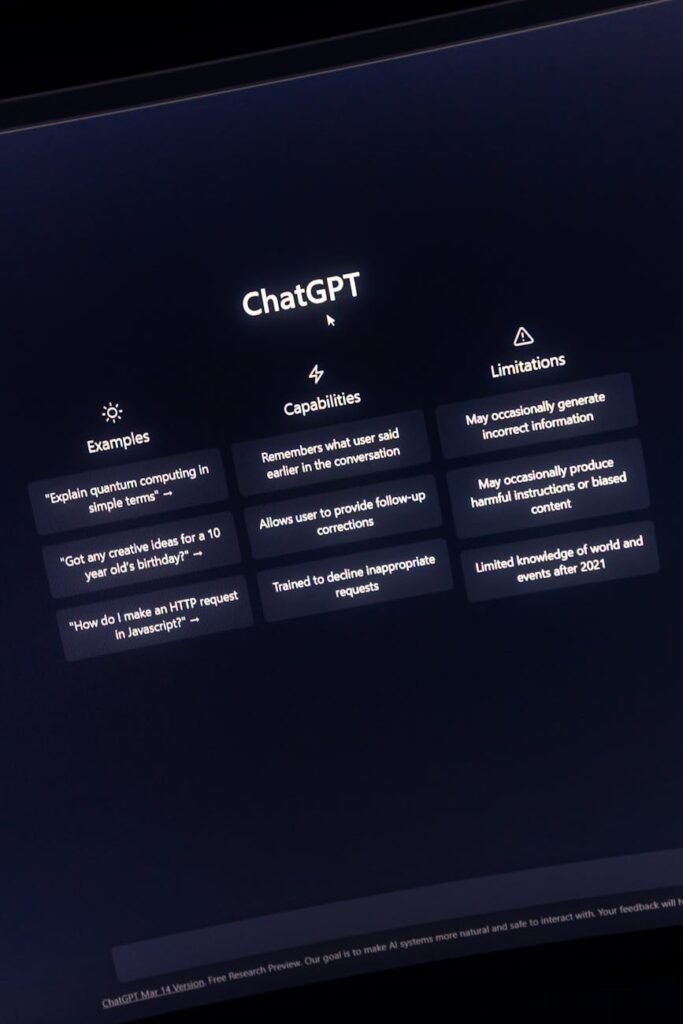
7. Exploring Advanced Natural Language Processing Applications in Industry
Beyond the everyday consumer-facing tools, NLP is revolutionizing specialized fields.
In healthcare, NLP is used to analyze unstructured clinical notes, patient records, and medical research. This helps doctors identify patient risk factors, diagnose diseases earlier, and discover new treatment insights from vast amounts of data that would be impossible for a human to process. For example, a system could scan thousands of pathology reports to find patterns that correlate with a specific type of cancer.
In finance, algorithms perform sentiment analysis on news articles and social media feeds to predict stock market movements. This is often called algorithmic trading. Legal teams use NLP for e-discovery, where systems can scan millions of documents to find relevant information for a case, saving countless hours of manual labor by paralegals.
The Future is Conversational
So, where is all this heading? The applications of NLP are only going to become more integrated and more sophisticated. We’re moving towards a world of true conversational AI, where interacting with technology feels as natural as talking to another person. Imagine a virtual assistant that understands not just your words, but your tone, your mood, and your past conversations to provide truly personalized help.
We’ll see hyper-personalization in marketing, more effective and empathetic AI-powered mental health companions, and educational tools that can understand a student’s written answer and provide targeted, helpful feedback. The challenges remain—conquering sarcasm, eliminating bias in training data, and ensuring privacy are all huge hurdles. But the progress is undeniable. The silent engine of NLP is getting louder, and it’s changing our world one sentence at a time.
Conclusion
From the moment you wake up and check your phone to the search you make for a dinner recipe, natural language processing applications are constantly at work. They’re not just novelties; they are fundamental utilities that make technology more accessible, powerful, and intuitive. What once required complex commands and coding knowledge can now be accomplished with a simple spoken phrase. The bridge between human language and computer logic has been built, and it’s making our digital lives richer and more efficient every single day.
FAQ
What is the difference between AI, Machine Learning, and NLP?
Think of them as nested dolls. Artificial Intelligence (AI) is the broadest concept of creating intelligent machines. Machine Learning (ML) is a subset of AI where systems learn from data to make predictions or decisions without being explicitly programmed. Natural Language Processing (NLP) is a specialized subset of AI and ML that focuses specifically on enabling computers to understand and process human language.
What are the biggest challenges facing NLP today?
Three of the biggest challenges are ambiguity, context, and bias. Human language is full of words with multiple meanings (ambiguity). Understanding the true meaning requires grasping the broader situation (context), which is very difficult for machines. Additionally, NLP models are trained on vast amounts of text from the internet, and they can inadvertently learn and perpetuate the societal biases (related to gender, race, etc.) present in that data. Overcoming these hurdles is a major focus of current research.
How can I start learning about NLP?
There are many fantastic resources! For beginners, online courses on platforms like Coursera or edX offer structured introductions. You can also explore popular Python libraries like NLTK (Natural Language Toolkit) or spaCy, which have great documentation and tutorials. Playing around with these tools and building simple projects, like a basic sentiment analyzer, is one of the best ways to learn.


 AI Tools for Freelancers: Work Smarter, Not Harder in 2024
  AI and Job Displacement: Your Guide to the Future of Work
  AI’s Impact: How It’s Transforming Industries Today
  AI in Cybersecurity: The Future of Digital Defense is Here
  AI-Powered Marketing: The Ultimate Guide for Growth (2024)
  AI in Education: How It’s Shaping Future Learning
  Backtest Crypto Trading Strategies: A Complete Guide
  NFT Standards: A Cross-Chain Guide for Creators & Collectors
  Decentralized Storage: IPFS & Arweave Explained Simply
  How to Calculate Cryptocurrency Taxes: A Simple Guide
  Your Guide to Music NFTs & Top Platforms for 2024
  TradingView for Crypto: The Ultimate Trader’s Guide