

 MMM
MMM Let’s talk about a concept that sounds like it’s straight out of a science fiction movie but is very much a reality on today’s factory floors. It’s a game-changer. We’re talking about digital twins in manufacturing. Imagine having a perfect, living, breathing virtual replica of your entire production line, a machine, or even a single product. A replica that doesn’t just look the same, but behaves the same, reacting to real-world data in real-time. That’s the core idea, and it’s completely reshaping how things are made, monitored, and maintained.
This isn’t just another buzzword. It’s a fundamental shift. For years, manufacturers have relied on experience, trial-and-error, and static models. It worked, but it was often inefficient and expensive. The digital twin flips that script entirely. It provides a risk-free sandbox where you can test, tweak, and even break things without any real-world consequences. The potential is staggering, touching every single part of the manufacturing lifecycle, from the first sketch of a design to the final product rolling off the line.
Key Takeaways
- What is a Digital Twin? It’s a dynamic, virtual model of a physical object or system that’s continuously updated with real-time data from sensors.
- Why Does it Matter? Digital twins enable predictive maintenance, process optimization, and faster product development, leading to massive cost savings and efficiency gains.
- Core Applications: Key uses include simulating production changes, predicting equipment failure, improving product quality, and training operators in a safe, virtual environment.
- The Future is Connected: The evolution of digital twins points towards interconnected networks of twins, representing entire supply chains and ecosystems, powered by AI and machine learning.
What Exactly Is a Digital Twin?
So, what are we really talking about here? Let’s break it down. A digital twin is not just a 3D CAD model or a simple simulation. Those are static. They’re like a photograph of a person—it captures a moment in time, but it doesn’t tell you their heart rate, what they’re thinking, or if they’re about to get sick.
A digital twin, on the other hand, is like a living, virtual avatar. It’s composed of three key parts:
- The Physical Object: This is the real thing. A CNC machine, a robotic arm, an entire assembly line, or even a wind turbine out in a field.
- The Virtual Model: This is the digital counterpart. It’s a highly detailed 3D model that doesn’t just replicate the object’s geometry but also its physics, materials, and behaviors.
- The Data Link: This is the magic ingredient. Sensors on the physical object (collecting data on temperature, vibration, pressure, output, etc.) constantly feed information to the virtual model. This connection is a two-way street; insights from the virtual model can be used to control or adjust the physical object.
This constant stream of data means the digital twin evolves right alongside its physical counterpart. It ages, it wears down, and it reacts to its environment, just like the real thing. It’s a dynamic, up-to-the-second source of truth about the asset’s condition and performance.

The Core Components: What Makes a Digital Twin Tick?
Building an effective digital twin isn’t as simple as just firing up some modeling software. It’s an integration of several powerful technologies, all working in concert. Think of it as an orchestra, where each instrument plays a critical part in creating the final symphony.
- Internet of Things (IoT) Sensors: These are the eyes and ears. They are the data collectors embedded in the physical asset. They capture everything from vibration frequencies in a motor to the temperature of a welding torch. Without good, clean data from IoT devices, a digital twin is just a pretty picture.
- Cloud Computing & Data Processing: All that sensor data has to go somewhere. The cloud provides the massive storage and computational power needed to process these torrential data streams in near real-time. This is where raw numbers are turned into actionable insights.
- Modeling and Simulation Software: This is the canvas where the virtual replica is built. Advanced software is used to create models that are not only visually accurate but also behave according to the laws of physics, material science, and operational logic.
- Artificial Intelligence (AI) and Machine Learning (ML): This is the brain. AI and ML algorithms analyze the incoming data, identify patterns, predict future outcomes, and learn over time. An ML model might, for example, learn to recognize the specific vibration pattern that precedes a bearing failure, something a human might easily miss.
How Digital Twins in Manufacturing Are Changing the Game
This is where the rubber meets the road. The theoretical concept is cool, but the practical applications are what make digital twins so revolutionary for manufacturers. It’s about moving from a reactive mindset (“fix it when it breaks”) to a proactive, predictive one (“fix it before it even thinks about breaking”).
Predictive Maintenance: Seeing the Future of Your Machines
This is arguably the biggest and most immediate benefit. Traditionally, maintenance is done on a schedule (preventive) or when something fails (reactive). Both are inefficient. Scheduled maintenance often means replacing parts that are still perfectly fine, while reactive maintenance means costly, unplanned downtime.
A digital twin changes everything. By constantly monitoring the health of a machine through its virtual counterpart, you can predict failures with incredible accuracy. The twin might notice a tiny increase in motor temperature and a subtle change in its vibration signature. The AI analyzes this data, compares it to historical patterns, and flags an alert: “Warning: Bearing 7 is 95% likely to fail in the next 72 hours.”
Suddenly, you can schedule maintenance during a planned shutdown, order the exact part you need, and avoid a catastrophic failure that could halt your entire production line. That’s not just saving money; that’s a competitive advantage.
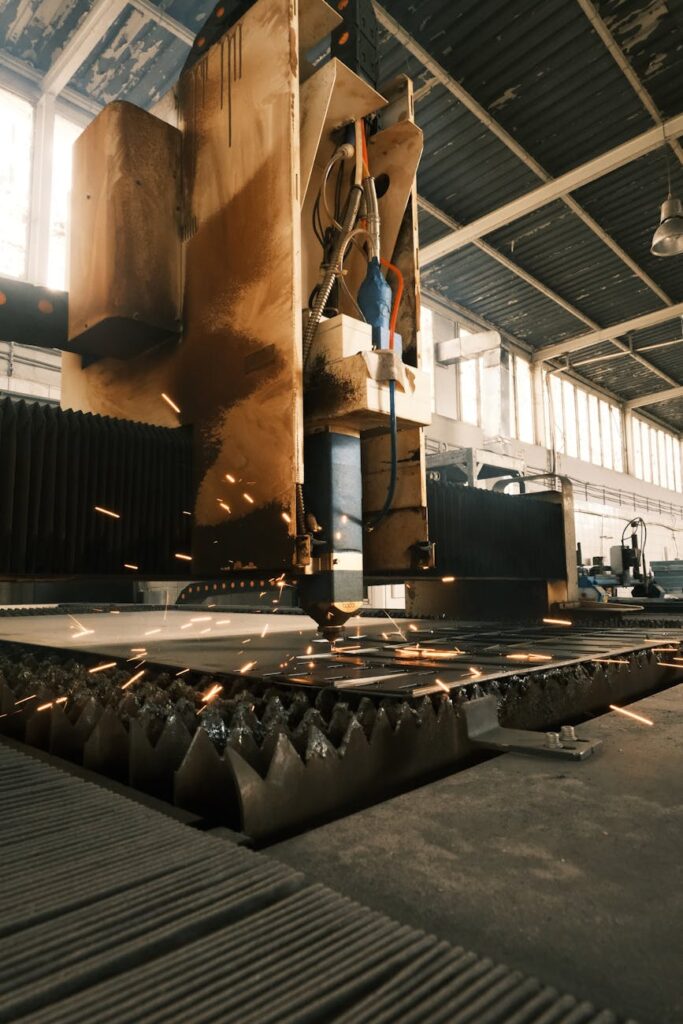
Process Optimization and Simulation: The Ultimate Sandbox
What happens if we increase the conveyor belt speed by 5%? What’s the impact on quality if we use a different raw material? How would a new robotic arm affect the workflow downstream? Answering these questions in the real world is risky and expensive. You might create bottlenecks, produce a batch of bad products, or even damage equipment.
With a digital twin of your production line, you can run these scenarios in the virtual world first. It’s a risk-free playground. You can test hundreds of variables to find the absolute sweet spot for efficiency, quality, and throughput. You can identify hidden bottlenecks you never knew existed and reconfigure your line for maximum performance—all without interrupting a single second of actual production.
“The ability to simulate changes before implementation is a paradigm shift. We’re moving from ‘best guess’ to ‘data-proven’ optimization, saving millions in the process.”
Product Design and Prototyping: Building it Right the First Time
The lifecycle of a product starts long before it hits the assembly line. The digital twin concept extends here, too, in the form of a ‘digital thread’. As a product is designed, its digital twin can be put through its paces in a virtual environment. How will it hold up under stress? What are its thermal properties? How will it perform over a 10-year lifespan?
This virtual testing drastically reduces the need for expensive and time-consuming physical prototypes. Engineers can iterate on designs much faster, identifying and fixing flaws in the digital realm. By the time the first physical prototype is built, it’s already been through a lifetime of testing, ensuring a much higher quality product gets to market faster.
Supply Chain and Logistics: A Bird’s-Eye View
Manufacturing doesn’t happen in a vacuum. It’s part of a complex, sprawling supply chain. Digital twins can be expanded to model not just the factory but the entire logistics network. A twin of the supply chain can track raw materials from the supplier, monitor inventory levels in real-time, and simulate the impact of disruptions.
What if a shipment of critical components is delayed by a storm? The supply chain twin can instantly model the impact on production and suggest alternative sourcing or rerouting options to mitigate the delay. This provides a level of resilience and agility that was previously unimaginable.
The Real-World Impact: Seeing is Believing
Let’s look at a couple of tangible examples. An aerospace company might use a digital twin for every jet engine it manufactures. Throughout the engine’s 30-year lifespan, sensors feed performance data back to its twin. This allows the company to offer ‘power-by-the-hour’ services, where airlines pay for performance, not just the physical engine. The company can predict maintenance needs for its entire global fleet, optimizing schedules and ensuring maximum flight time.
Or consider a consumer goods company. They create a digital twin of their bottling line. Before launching a new bottle shape, they run it through the virtual line. The simulation reveals that the new shape is slightly unstable and will cause jams at a specific corner of the conveyor. They adjust the design in the CAD software, re-run the simulation, and confirm the problem is solved. This entire process takes a few hours, saving them from a week of downtime and thousands of dollars in wasted product had they discovered the problem on the physical line.
Overcoming the Hurdles: Challenges in Implementation
Of course, adopting digital twin technology isn’t as simple as flipping a switch. It’s a significant undertaking with a few key challenges that companies need to navigate.
- Data Integration and Quality: A digital twin is only as good as the data it receives. Integrating data from a wide array of sensors, legacy systems (like ERP and MES), and different data formats can be a massive IT challenge. Ensuring data accuracy and security is paramount.
- High Initial Investment: The technology isn’t cheap. The cost of sensors, software licenses, cloud computing, and the skilled personnel to run it all can be substantial. However, it’s crucial to view this as an investment with a significant long-term ROI, not just a cost.
- The Skills Gap: You need people who understand the intersection of operational technology (OT), information technology (IT), and data science. Finding and retaining talent with this unique blend of skills can be difficult. Upskilling the existing workforce is often a critical part of a successful implementation strategy.
- Cultural Shift: Moving to a data-driven, predictive model requires a change in mindset from the factory floor to the boardroom. People need to trust the data and the insights generated by the twin, moving away from a ‘gut-feel’ approach to decision-making.

The Future is Twin: What’s Next?
We are still in the early days of what digital twins can do. The future is incredibly exciting. We’re moving towards a world of interconnected twins. Imagine a digital twin of a product that’s connected to the twin of the factory that made it, which is in turn connected to the twin of the supply chain that feeds it. This creates a complete, holistic view of the entire value chain.
AI will become even more integral, allowing twins to not only predict failures but to autonomously make decisions to optimize processes or re-route orders. They will become self-healing and self-optimizing systems. Furthermore, as the technology becomes more accessible, we’ll see it adopted not just by giant corporations but by small and medium-sized manufacturers, democratizing the benefits of Industry 4.0.
Conclusion
The role of digital twins in modern manufacturing is no longer a question of ‘if’, but ‘when and how’. It represents a profound evolution from static, disconnected systems to dynamic, intelligent, and interconnected ones. By bridging the gap between the physical and digital worlds, these virtual replicas offer an unprecedented level of insight and control. They allow manufacturers to be smarter, faster, and more efficient. It’s about building better products, running leaner operations, and pre-empting problems before they exist. The journey to implementation may have its challenges, but the destination—a truly smart, resilient, and optimized factory—is well worth the effort.
FAQ
What is the difference between a digital twin and a simulation?
A simulation is a model that runs ‘what-if’ scenarios in a virtual environment but is not connected to a physical object in real-time. A digital twin is a simulation, but it’s a special kind that is continuously updated with live data from its physical counterpart. This real-time, two-way connection is the key differentiator, allowing the twin to reflect the current state of the physical asset, not just a theoretical one.
How much does it cost to implement a digital twin?
The cost varies dramatically depending on the scope and complexity. A digital twin of a single, critical component might cost tens of thousands of dollars, while a twin of an entire factory could run into the millions. The cost includes sensors, software platforms, data infrastructure, and implementation services. It’s best to start small with a high-value pilot project to prove ROI before scaling up.


 Boost CX with Augmented Reality: Your Ultimate Guide
  Headless Commerce Explained: Is It Right for Your Brand?
  Quantum Computing’s Potential: A Business Guide
  Prepare Your Business for a Black Swan Event: A Guide
  Build a Business That Runs Without You: A Founder’s Guide
  What is the Six Sigma Approach? A Guide to Quality
  Backtest Crypto Trading Strategies: A Complete Guide
  NFT Standards: A Cross-Chain Guide for Creators & Collectors
  Decentralized Storage: IPFS & Arweave Explained Simply
  How to Calculate Cryptocurrency Taxes: A Simple Guide
  Your Guide to Music NFTs & Top Platforms for 2024
  TradingView for Crypto: The Ultimate Trader’s Guide