

 MMM
MMM The Art of the Flaneur: Aimless Wandering for Relaxation
When was the last time you walked without a destination? I mean truly, genuinely, without a single thought of getting from Point A to Point B. No Google Maps dictating your turns, no podcast buzzing in your ears, no mental checklist of errands to run. Just you, your feet, and the world unfolding around you. If you can’t remember, you’re not alone. In our hyper-productive, goal-oriented world, the very idea of moving without a purpose feels… indulgent. Inefficient. Maybe even a little bit lazy. But what if I told you that this very act, this practice of aimless wandering, is one of the most powerful tools you have for relaxation, creativity, and genuine connection? Welcome to the art of the flâneur.
This isn’t about getting your 10,000 steps in. It’s not a workout. It’s a soul-out. It’s the deliberate choice to get a little lost, to let your curiosity lead you down an unfamiliar alleyway, to simply exist within your environment instead of just passing through it on your way to something else. It’s about trading efficiency for experience. And in an age of constant digital noise and overwhelming pressure to perform, it might be the most radical act of self-care you can practice.
Key Takeaways
- A flâneur is a person who wanders a city to experience it, observing life without a specific goal.
- The practice of aimless wandering is a powerful antidote to modern stress, anxiety, and digital overload.
- Key benefits include enhanced mindfulness, a significant boost in creativity, and improved mental and physical well-being.
- Anyone can be a flâneur; it requires no special equipment, just a willingness to be present and curious in your surroundings.
So, What Exactly is a Flâneur?
The term flâneur (or flâneuse for a woman) is French, and like many French words, it carries a weight and nuance that a simple translation can’t quite capture. To “flâner” means to stroll, to saunter, to lounge. But a flâneur is much more than a simple stroller. The concept was born in the 19th-century, amidst the sprawling, newly renovated boulevards of Paris. Think of gas lamps, bustling cafes, and grand arcades. This was the flâneur’s natural habitat.
The poet Charles Baudelaire immortalized the flâneur as a figure of the urban artist-poet. For him, the flâneur was a “passionate spectator,” a connoisseur of the street. This was a person who could plunge into the crowd, becoming “one flesh with the multitude,” yet remain perfectly, incisively observant. They weren’t rushing to a meeting. They were there for the spectacle of everyday life itself. They read the city like a book, noticing the subtle interactions between strangers, the way the light hit a building at a certain hour, the forgotten architectural details on a facade everyone else ignored. The crowd was their canvas, and their mind was the brush.
Later, the philosopher Walter Benjamin picked up the idea, seeing the flâneur as a kind of amateur detective, a botanist of the sidewalk. They were figures of leisure, yes, but also of keen perception. They moved slowly through the city precisely because they were processing so much information. They were masters of observation, finding poetry in the mundane and significance in the overlooked. They were the original practitioners of urban mindfulness, long before the term ever existed.
Why Did We Lose the Art of Aimless Wandering?
If being a flâneur sounds so wonderful, where did they all go? Why does walking without a purpose feel so alien to us now? The answer is woven into the very fabric of our modern lives.
The Tyranny of the Ticking Clock
We live under the constant pressure of productivity. Every minute of our day is expected to be optimized, scheduled, and accounted for. We have work goals, fitness goals, social goals. Time spent “doing nothing” is often framed as time wasted. We don’t just walk; we power walk. We don’t just commute; we listen to a podcast to learn a new skill. The idea of dedicating an hour to simply be, with no measurable outcome, runs counter to everything our culture preaches. The slow, meandering pace of the flâneur has been replaced by the frantic, head-down rush of the perpetually busy.
The Digital Leash
Then there’s the glowing rectangle in our pockets. Smartphones, for all their wonders, are attention vampires. They have effectively eliminated boredom, and with it, the unstructured mental space where wandering and observation thrive. When we have a spare moment waiting for a bus or in line for coffee, we don’t look around at the world. We look down at our screens. We’ve replaced the rich, unpredictable tapestry of the physical street with the curated, algorithmic feed of the digital one. Google Maps ensures we never get lost, which also means we rarely discover anything by accident. Our phones tether us to the digital world, making it incredibly difficult to fully immerse ourselves in the physical one.
The Surprising Benefits of Doing Nothing, Beautifully
Reclaiming the art of the flâneur isn’t just a quaint, nostalgic exercise. It’s a potent form of mental and emotional medicine with real, tangible benefits. It’s about consciously un-plugging to re-engage.
Sharpen Your Senses and Practice Mindfulness
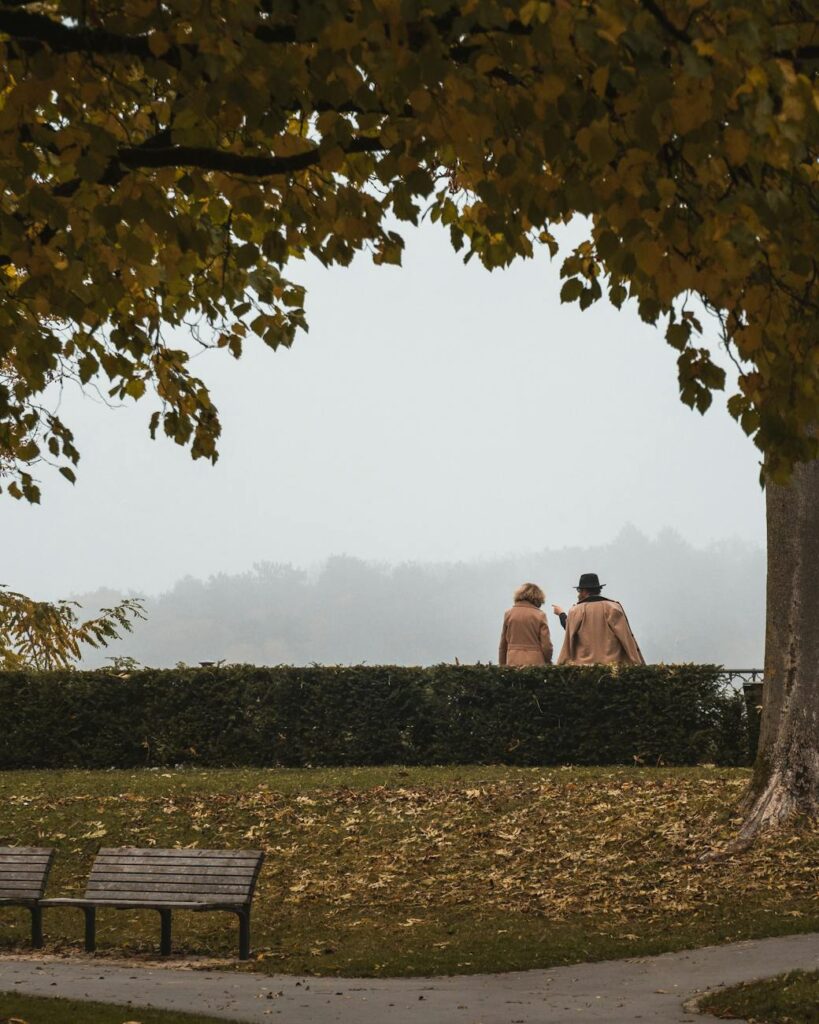
Aimless wandering is, at its core, a mindfulness practice. When you remove a destination and a deadline, you are forced into the present moment. You start to notice things you’d otherwise miss. Really notice them. You’ll hear the specific rhythm of a distant construction site, the chatter of birds you never knew lived in the city, the way different languages weave together in a crowd. You’ll smell the exhaust fumes, yes, but also the fresh bread from a bakery or the damp earth after a light rain. You’ll feel the texture of a brick wall, the warmth of a sunbeam breaking through the buildings. It pulls you out of the anxious chatter of your own mind and grounds you firmly in your physical reality. It is meditation in motion.
A Playground for Your Creative Mind
Ever notice how your best ideas come to you in the shower, or while washing dishes, or on a long drive? That’s not a coincidence. Neuroscientists call this the “default mode network,” a state your brain enters when it’s not focused on a specific task. This is the brain state associated with creativity, daydreaming, and connecting disparate ideas. A purposeful walk, where you’re focused on your pace or destination, doesn’t quite get you there. But a truly aimless wander? That’s prime time for the default mode network. As your body moves on autopilot, your mind is free to roam, make new connections, and solve problems that have been stubbornly resisting your focused efforts. Countless writers, artists, and thinkers throughout history have sworn by the creative power of a long, purposeless walk.
The Gentle Boost to Your Physical and Mental Health
Let’s not forget the simple physical benefits. Walking is fantastic, low-impact exercise. But a flâneur’s stroll has added mental perks. By being unstructured and non-goal-oriented, it avoids the performance pressure that can sometimes come with formal exercise. It’s gentle, restorative movement. Studies have shown that walking, particularly in green spaces or engaging urban environments, can lower levels of the stress hormone cortisol, reduce symptoms of anxiety and depression, and improve mood. It’s a simple, free, and accessible way to care for both your body and your mind simultaneously.
“Above all, do not lose your desire to walk: every day I walk myself into a state of well-being and walk away from every illness; I have walked myself into my best thoughts, and I know of no thought so burdensome that one cannot walk away from it.” – Søren Kierkegaard
How to Practice the Art of Aimless Wandering: A Practical Guide
Ready to give it a try? It’s simpler than you think. The hardest part is giving yourself permission. Here’s a simple guide to your first flânerie.
- Schedule Nothing. This is key. Don’t try to squeeze it in between appointments. Block out a real chunk of time—an hour is great, two is even better—with absolutely no objective other than to wander. Protect this time fiercely.
- Leave the Tech Behind (or Silence It). The best option is to leave your phone at home. If that feels too scary, put it on airplane mode or, at the very least, bury it deep in a pocket or bag. No music, no podcasts, no audiobooks. The soundtrack is the world around you.
- Forget the Map. Ditch Google Maps. The point isn’t to get somewhere efficiently; it’s to get lost a little. Head out your door and just… pick a direction. When you get to a corner, choose the street that looks more interesting. Let pure curiosity be your guide.
- Follow Your Curiosity. This is your only rule. Did a weird sign catch your eye? Go look at it. Does that narrow alley look intriguing? Head down it. Is there an interesting sound coming from around the corner? Go investigate. Follow the breadcrumbs of your own attention. Let your senses pull you along.
- Engage All Your Senses. Don’t just look. Actively listen, smell, and feel. Try the 5-4-3-2-1 grounding technique: name five things you can see, four things you can feel (the breeze on your skin, the texture of your keys in your pocket), three things you can hear, two things you can smell, and one thing you can taste (the lingering coffee on your tongue).
- Release Judgment. You might feel silly at first. You might feel unproductive. That’s the hustle culture conditioning talking. Acknowledge the feeling and let it go. There is no “right” or “wrong” way to do this. The only goal is to have no goal.
Conclusion: Embrace the Beauty of the Detour
In a world that shouts for more—more speed, more efficiency, more data, more connection—the flâneur offers a quiet whisper of an alternative. It’s a reminder that there is profound value in slowness, in observation, and in the simple act of being present in our own lives. Aimless wandering isn’t about escaping reality; it’s about diving into it more deeply than ever before. It’s about finding the extraordinary in the ordinary, the magic in the mundane.
So, the next time you have a spare hour, I challenge you. Put down your phone, step outside your door, and just walk. Don’t plan your route. Don’t time your pace. Just wander. See what you discover—not just about the streets you walk, but about the quiet, observant, and creative person who walks them.
Frequently Asked Questions
Is being a flâneur just a fancy term for wasting time?
Not at all! While it may look like “doing nothing” from a productivity standpoint, it’s actually a very active form of mental and sensory engagement. It’s an intentional practice of rest and observation that recharges your creative batteries, reduces stress, and deepens your connection to your environment. Think of it as restorative maintenance for your mind, not wasted time.
Do I need to live in a big, beautiful city like Paris to practice this?
Absolutely not. While the concept was born in a bustling metropolis, the spirit of the flâneur can be applied anywhere. You can wander through your own suburban neighborhood, a small town, a local park, or even a sprawling shopping mall. The key isn’t the location, but the approach: an open curiosity and a willingness to see a familiar place with fresh eyes. Every environment has its own unique details and rhythms waiting to be discovered.


 Find Your Zen: The World’s Most Calming Hotel Lobbies
  Find the Best Train Carriages for Quiet & Scenic Views
  Hammock Reading: Finding Joy in Simple Pleasures
  Create a Sensory Souvenir: Remember Your Trip Forever
  The Calming Colors of a Santorini Sunset Explained
  Discover the World’s Best Planetariums: A Guide
  Backtest Crypto Trading Strategies: A Complete Guide
  NFT Standards: A Cross-Chain Guide for Creators & Collectors
  Decentralized Storage: IPFS & Arweave Explained Simply
  How to Calculate Cryptocurrency Taxes: A Simple Guide
  Your Guide to Music NFTs & Top Platforms for 2024
  TradingView for Crypto: The Ultimate Trader’s Guide