



Compound Interest Explained: How Small Consistent Deposits Grow Over Time
Compound interest explained in simple terms is the engine that drives significant wealth accumulation, turning small, consistent deposits into substantial sums over decades. It’s often called the eighth wonder of the world for good reason, as it allows your money to work for you, generating earnings not just on your initial investment, but also on the accumulated interest itself.
Table of Contents
- The Magic of Compounding: More Than Just Interest
- How Compound Interest Works in Practice
- The Crucial Role of Time and Consistency
- Harnessing Compound Interest for Your Financial Goals
- The Compound Interest Formula
- Factors Affecting Compound Growth
- Common Misconceptions About Compound Interest
- Maximizing Your Returns with Compound Interest
Imagine your money having little money-making babies. Those babies then grow up and have their own babies, and so on. That’s essentially how compound interest functions, creating a snowball effect that accelerates your financial growth.
Understanding this powerful concept is crucial for anyone looking to build long-term wealth, whether through savings accounts, investments, or retirement planning. The sooner you start, and the more consistently you contribute, the more dramatic the results will be.
The Magic of Compounding: More Than Just Interest
At its core, compound interest means earning interest on your principal (the initial amount you deposit) and also on the interest that has already been added to your account. This is different from simple interest, where you only earn interest on your initial principal.
Simple interest is linear. Compound interest is exponential. This difference might seem minor initially, but over time, it leads to vastly different outcomes.
Consider this: if you invest $1,000 at a 5% simple interest rate for 10 years, you’ll earn $50 each year, totaling $500 in interest. Your total would be $1,500.
Now, with compound interest at the same 5% rate, your first year’s interest is $50. But in the second year, you earn 5% on $1,050 ($52.50), not just $50. This small difference compounds year after year.
By the end of 10 years with compound interest, that same $1,000 investment at 5% would grow to approximately $1,628.89. That extra $128.89 might not seem like much, but the gap widens dramatically with longer time horizons and higher interest rates.


How Compound Interest Works in Practice
The power of compounding lies in two key factors: time and consistency. The longer your money has to grow, the more significant the compounding effect becomes. Similarly, making regular, consistent deposits fuels this growth even further.
Let’s break down the mechanics. Interest can be compounded at different frequencies: annually, semi-annually, quarterly, monthly, or even daily. The more frequently your interest is compounded, the faster your money grows, as the interest begins earning its own interest sooner.
For example, if you have $10,000 earning 6% annual interest, compounded quarterly, you’d earn 1.5% each quarter. Over the year, the total earnings would be slightly higher than if it were compounded only annually.
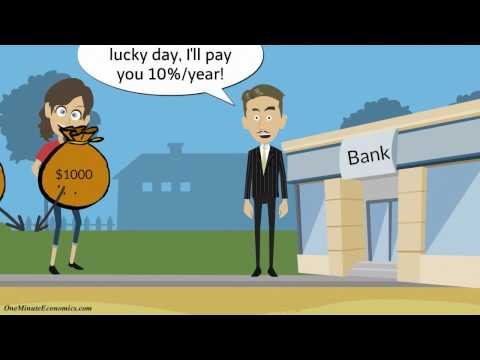
Compound interest explained in terms of practical application means understanding that every dollar you save and invest is a seed for future growth. It’s not just about the principal; it’s about the earned interest working tirelessly for you.
The Crucial Role of Time and Consistency
Time is arguably the most critical ingredient in the compound interest recipe. The earlier you start saving and investing, the more time your money has to benefit from compounding. This is why starting early, even with small amounts, is so impactful.
A young investor who starts with $100 per month at age 20, earning an average of 7% annually, will likely end up with far more than someone who starts with $200 per month at age 40, even with the same 7% return. This is the magic of letting time work its wonders.
Consistency is the second pillar. Regularly adding to your savings or investment accounts ensures you are continually feeding the compounding process. Think of it as adding more logs to a fire; the more fuel you add, the hotter and more robust it burns.
Even small, regular contributions, like $50 or $100 per month, can add up significantly over decades. This habit transforms passive saving into an active wealth-building strategy.
Harnessing Compound Interest for Your Financial Goals
Understanding how to harness compound interest is key to achieving various financial goals, from building an emergency fund to saving for retirement or a down payment on a home.
Saving for Retirement
Retirement accounts like 401(k)s and IRAs are prime examples of where compound interest shines. Contributions are often made regularly, and the investments within these accounts have the potential to grow over many years, benefiting from compounding.
The earlier you contribute to these accounts, the more time your money has to grow. Many employers offer matching contributions, which is essentially free money that further accelerates your compounding. Always aim to contribute enough to get the full match.
Building an Emergency Fund
While an emergency fund might not offer high returns, even a modest interest rate on a savings account will contribute to its growth over time through compounding. The primary goal here is safety and accessibility, but earning some interest is a bonus.
Investing in the Stock Market
The stock market, while carrying risk, has historically offered higher returns than savings accounts. When you reinvest dividends and capital gains, you are effectively benefiting from compound interest on your investment growth.
Diversified investments like index funds or ETFs allow your money to grow and compound across a broad range of companies, mitigating some of the risk associated with individual stocks.

The Compound Interest Formula
While you don’t need to be a mathematician to benefit from compound interest, understanding the formula can provide deeper insight into its workings. The basic compound interest formula is:
A = P (1 + r/n)^(nt)
Where:
A= the future value of the investment/loan, including interestP= the principal investment amount (the initial deposit or loan amount)r= the annual interest rate (as a decimal)n= the number of times that interest is compounded per yeart= the number of years the money is invested or borrowed for
Let’s plug in an example. If you invest $1,000 (P) at an annual interest rate of 8% (r = 0.08), compounded monthly (n = 12), for 20 years (t), the future value (A) would be:
A = 1000 (1 + 0.08/12)^(12*20)
A = 1000 (1 + 0.0066667)^(240)
A ≈ 1000 (1.0066667)^240
A ≈ 1000 (4.899)
A ≈ $4,899.37
In this scenario, your initial $1,000 grows to nearly $4,900 over 20 years, with over $3,800 coming from compound interest alone.
Factors Affecting Compound Growth
Several factors influence how quickly your money grows through compounding:
Interest Rate
A higher interest rate leads to faster growth. Even a small increase in your annual return can have a significant impact over long periods.
Time Horizon
As mentioned, time is your greatest ally. The longer your money is invested, the more opportunities it has to compound and grow.
Frequency of Compounding
More frequent compounding (daily vs. annually) results in slightly faster growth due to interest being added to the principal more often.
Contribution Amount
Regularly adding to your principal significantly boosts the overall growth. Consistent deposits provide more capital for interest to be calculated on.

Common Misconceptions About Compound Interest
Despite its power, compound interest is sometimes misunderstood. Here are a few common misconceptions:
It’s only for wealthy investors.
This is false. Compound interest is accessible to everyone. Starting with small, consistent deposits can lead to substantial wealth over time, regardless of your initial income.
It happens overnight.
Compounding is a long-term strategy. While initial growth might seem slow, its exponential nature becomes apparent over years and decades, not days or weeks.
It’s the same as simple interest.
As discussed, compound interest earns interest on interest, while simple interest only earns interest on the principal. The difference is profound over time.
Maximizing Your Returns with Compound Interest
To truly leverage compound interest, consider these strategies:
- Start Early: The biggest advantage you can give yourself is time. Begin saving and investing as soon as possible.
- Be Consistent: Make regular contributions, no matter how small. Automate your savings or investments if possible.
- Seek Higher Returns (Wisely): While safety is important, explore investment options that offer potentially higher returns than basic savings accounts, understanding the associated risks.
- Reinvest Earnings: Ensure that any dividends or interest earned are automatically reinvested back into your investment or savings to fuel further compounding.
- Avoid Early Withdrawals: Resist the temptation to tap into your long-term investments or savings. Each withdrawal disrupts the compounding process.

The principle of compound interest explained as a powerful wealth-building tool is universally applicable. Whether you’re saving for a small goal or planning for a comfortable retirement, understanding and applying the concept of compounding is essential for financial success.
By being patient, consistent, and informed, you can harness the incredible power of compound interest to significantly grow your wealth over time. It’s a testament to how small, regular efforts can lead to extraordinary results when given enough time and the right conditions.