

 MMM
MMM The Quiet Grandeur of Empty Stadiums and Theaters
There’s a strange magic to a place built for thousands, occupied by no one. Think about it. Standing in the middle of an empty stadium, you’re enveloped by a silence that feels heavier, more profound, than ordinary quiet. It’s a silence filled with the ghosts of roars, the echoes of applause, the spectral energy of moments that defined careers and united cities. The same is true for a theater, its velvet seats holding the memory of a million gasps and laughs. This isn’t just about vacant architecture; it’s about the powerful, contemplative experience of witnessing the quiet grandeur of empty stadiums and theaters. It’s a feeling that’s hard to shake.
We’re conditioned to see these places as vessels for noise, for passion, for humanity at its most expressive. A stadium is the backdrop for a last-minute touchdown. A theater is the stage for a heart-wrenching monologue. But when you strip away the people, you’re left with something entirely different. The structure itself comes alive. You notice the perfect geometry of the seating bowl, the way the light catches the stage floor, the sheer, breathtaking scale of it all. You’re no longer a spectator in a crowd; you’re an explorer in a modern cathedral, a silent witness to a space at rest.
Key Takeaways:
- Empty stadiums and theaters offer a unique psychological experience, evoking feelings of nostalgia, awe, and a connection to a collective past.
- The absence of crowds allows for a deeper appreciation of the venue’s architecture, revealing details and design intentions that are normally overlooked.
- These silent spaces act as containers of history, where the echoes of past events feel almost tangible.
- For photographers and urban explorers, these venues are prized subjects, offering dramatic compositions of light, shadow, and scale.
The Psychology of Emptiness: More Than Just a Vacant Space
Why are we so captivated by these silent giants? The fascination goes deeper than just cool visuals. It taps into a psychological phenomenon known as liminality. A liminal space is a place of transition, a threshold between what was and what’s next. An empty airport terminal at 3 AM, a deserted school hallway during summer, and an empty stadium after the game—they all share this quality. They are spaces of ‘in-between,’ charged with the potential of what they’re for, but currently existing in a state of pure, unfulfilled potential. It’s a bit eerie. A bit beautiful.
This feeling is amplified by the power of collective memory. You’ve never been to the Colosseum in Rome during its heyday, but you can stand within its ruins and almost feel the roar of 50,000 spectators. The same principle applies to modern venues. When you stand on the turf of an empty Lambeau Field, you’re not just standing on grass. You’re standing on the same ground where legends were made, where the ‘Ice Bowl’ was fought. The space is saturated with history. The silence isn’t empty; it’s pregnant with the past. It’s the deafening quiet that follows a thunderclap, where the memory of the sound is almost louder than the sound itself.
There’s also a sense of privileged access. We’re seeing something we’re not supposed to see. These venues are designed for chaos and crowds. To see them still and serene feels like being let in on a secret. It’s a behind-the-scenes pass to the soul of the building, a moment of intimacy with a structure that is usually a public spectacle. You can trace the scuff marks on the stage, see the faded numbers on the seats, and touch the cold steel of the railings. It becomes personal.
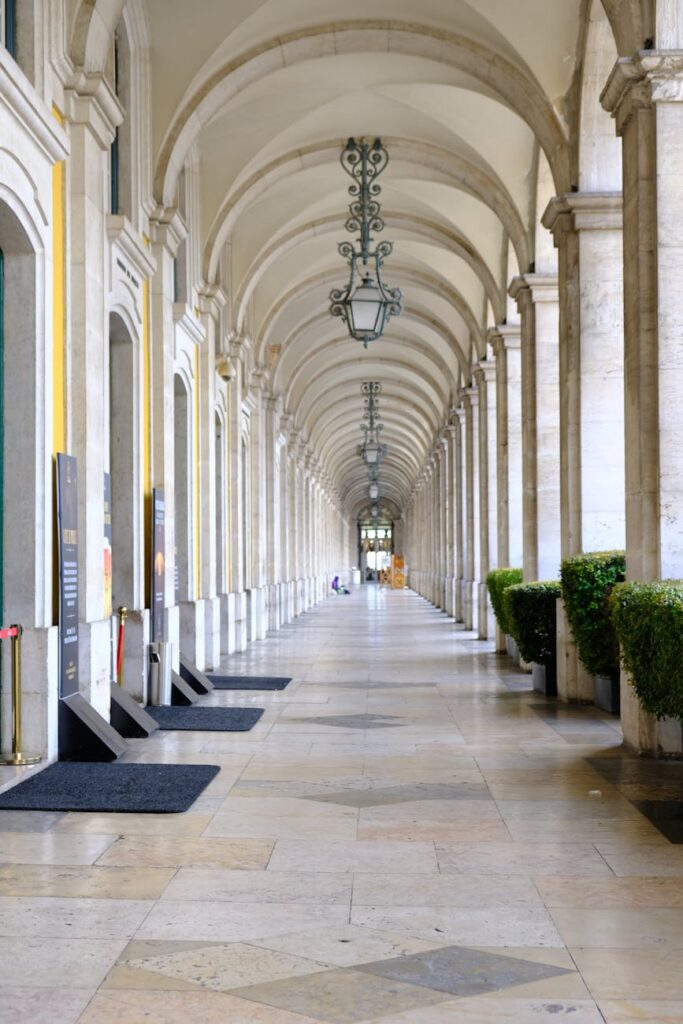
An Architectural Appreciation: Seeing the Bones of the Beast
When the spectacle is gone, the stage itself becomes the main event. The architecture of stadiums and theaters is a marvel of engineering and design, but we rarely appreciate it fully when it’s doing its job. During a game, your eyes are on the players, not the elegant curve of the cantilevered roof. During a play, you’re focused on the actors, not the intricate proscenium arch. But in the quiet, the architecture speaks.
You can finally appreciate the sheer audacity of it all. The vast, sweeping lines of a stadium bowl are designed to focus tens of thousands of individual perspectives onto a single point. It’s a colossal exercise in geometry and human psychology. You notice the rhythm of the staircases, the pattern of the exits, the way the structure funnels light and sound. These aren’t just buildings; they are meticulously crafted instruments for shared experience. And when they are silent, you can see how the instrument was made.
The Cathedral of Sport: Stadiums as Modern Coliseums
Modern stadiums are our Coliseums, our pyramids. They are monumental structures that reflect our society’s values—competition, community, and the pursuit of greatness. When empty, a stadium’s quasi-religious quality becomes undeniable. The light filtering through the roof can feel like it’s coming through the stained-glass window of a cathedral. The pitch or field below is an altar where secular rituals are performed. The rows upon rows of seats rise like pews, all directed towards the hallowed ground. It’s easy to see why they’re often called ‘temples’ of sport. Stripped of the screaming fans and commercial banners, their raw, powerful form is what remains. You feel small, humbled by the scale, in the same way you might feel standing in a grand old church. It’s a place built for pilgrimage, a destination for the faithful.
The Intimate Grandeur of Theaters
An empty theater offers a different, more intimate flavor of grandeur. While a stadium is about expansive, open-air spectacle, a theater is about controlled focus and acoustic perfection. The silence in a theater feels warmer, more enclosed. Your eyes are drawn to the deep red of the velvet, the glint of gold leaf on the balconies, and the dark, mysterious space of the stage itself. You can almost smell the old wood and dust. Every theater has a ‘ghost light’—a single bulb left burning on the stage when the house is dark. It’s there for practical safety, but it has become a powerful symbol. It represents the perpetual soul of the theater, a beacon ensuring that the stage is never truly empty, waiting for the next story to be told. It’s a promise of return, a quiet vigil in the dark.
Echoes of History: Stories in the Silence
Every great venue is a library of unwritten stories. To walk through an empty one is to browse its shelves. You can stand in the visitor’s dugout at Fenway Park and imagine Babe Ruth sitting there. You can wander onto the stage at the Ryman Auditorium in Nashville and feel the vibrations of Johnny Cash’s boots. The physical space becomes a trigger for our historical imagination. These are places where fortunes were won and lost, where records were shattered, and where collective joy and despair were felt on a massive scale.
“The air is full of ghosts… They are all around you. They are not scary. They are just there.”
This feeling is what makes behind-the-scenes tours of these venues so popular. It’s not just about seeing the locker rooms or the green room. It’s about connecting with the history that permeates the very walls. Think about some of the moments these silent spaces have held:
- Wembley Stadium: The site of England’s 1966 World Cup victory, a moment of national euphoria forever etched into the fabric of the place. Standing in the empty stadium, you can almost hear the echo of that final whistle.
- The Globe Theatre: A reconstruction, yes, but standing in its wooden ‘O’ connects you directly to Shakespeare. You’re in the space his words were designed for, feeling the same acoustics, seeing the same sky above.
- Madison Square Garden: It’s hosted everything from Ali vs. Frazier I to legendary concerts by John Lennon and Elton John. The silence in that arena is filled with the ghosts of rock and roll and the phantom thud of boxing gloves.
These places don’t need a crowd to feel alive. Their lifeblood is their history, and in the quiet, that history has room to breathe and speak to you.

The Photographer’s Muse: Capturing the Stillness of Empty Stadiums
It’s no surprise that photographers and urban explorers are deeply drawn to empty stadiums and theaters. These locations are a masterclass in composition, offering a stunning interplay of light, shadow, texture, and scale. The repetitive patterns of the seats create leading lines that draw the eye. The vast negative space of the empty field or stage provides a dramatic focal point. The low light of an indoor theater or the stark morning sun hitting a stadium creates a moody, atmospheric canvas.
For a photographer, capturing an empty venue is about more than just documenting a place. It’s about capturing a feeling. It’s about translating that sense of quiet grandeur, of liminality, of history, into a single frame. The challenge is to make the emptiness feel full, to make the silence resonate visually. Photographers like Franck Bohbot have made a career of capturing these public spaces in their solitary moments, transforming them into something ethereal and painterly. His images of theaters, libraries, and pools are devoid of people but full of character and story. They prove that the absence of a subject can, in itself, be the subject.
The resulting images often feel poignant, even melancholic. They remind us of the transient nature of our great gatherings. The crowds will always come and go, the noise will rise and fall, but the structure remains—a silent, patient observer of it all.

Conclusion
The next time you see a photo of an empty stadium or find yourself in a theater before the doors open, take a moment. Don’t just see a vacant space waiting to be filled. See it for what it is in that moment: a monument at rest. A vessel of memory. A masterpiece of design. There is a profound beauty in these quiet giants, a grandeur that doesn’t need a crowd to be felt. It’s in the architecture, in the history, and in the powerful, echoing silence. It’s a reminder that even when the show is over, the magic remains.
FAQ
Why are people fascinated by empty public spaces?
The fascination often stems from a combination of psychological factors. These ‘liminal spaces’ feel surreal and out of context, sparking our curiosity. They also evoke a strong sense of nostalgia and collective memory, allowing us to connect with the history of the place on a more personal level without the distraction of a crowd. There’s also an element of seeing something ‘behind the curtain,’ a view not meant for the general public.
What is a ‘ghost light’ in a theater?
A ghost light is a single, bare bulb, usually on a portable stand, that is left illuminated on the stage when a theater is unoccupied and dark. While its primary purpose is practical—to prevent people from accidentally falling off the stage in the dark—it is also surrounded by theatrical superstition and tradition. Many believe it keeps the theater’s ghosts happy and wards off bad luck, while others see it as a symbol that the theater is always waiting for its artists and audience to return.
Are there public tours available for most major stadiums and theaters?
Yes, many famous stadiums (like Fenway Park, Camp Nou, or Wembley) and historic theaters (like the Chicago Theatre or the Royal Albert Hall) offer behind-the-scenes tours. These tours are incredibly popular because they give visitors a chance to experience the venue’s quiet grandeur, walk on the field or stage, see locker rooms or dressing rooms, and learn about the location’s rich history from a guide.


 Find Your Zen: The World’s Most Calming Hotel Lobbies
  Find the Best Train Carriages for Quiet & Scenic Views
  Hammock Reading: Finding Joy in Simple Pleasures
  Create a Sensory Souvenir: Remember Your Trip Forever
  The Calming Colors of a Santorini Sunset Explained
  Discover the World’s Best Planetariums: A Guide
  Backtest Crypto Trading Strategies: A Complete Guide
  NFT Standards: A Cross-Chain Guide for Creators & Collectors
  Decentralized Storage: IPFS & Arweave Explained Simply
  How to Calculate Cryptocurrency Taxes: A Simple Guide
  Your Guide to Music NFTs & Top Platforms for 2024
  TradingView for Crypto: The Ultimate Trader’s Guide