



The Impact of Low-Earth Orbit Satellite Constellations on Global Telecom
The impact of low-earth orbit satellite constellations is rapidly reshaping the global telecommunications landscape. These vast networks of satellites, positioned closer to Earth than traditional geostationary satellites, offer unprecedented opportunities and significant challenges.
Table of Contents
From enhancing internet access to enabling new applications, LEO constellations are a transformative force. Understanding their multifaceted impact is crucial for businesses, governments, and individuals alike.
What are Low-Earth Orbit Satellite Constellations?
Low-Earth Orbit (LEO) refers to the region of space between 160 and 2,000 kilometers (about 99 to 1,242 miles) above the Earth’s surface. Satellites in LEO orbit the Earth much faster than those in higher orbits.
A constellation is simply a group of satellites working together to provide a continuous service. LEO constellations are characterized by having hundreds or even thousands of satellites.
The LEO Advantage: Speed and Latency
The primary advantage of LEO satellites is their proximity to Earth. This drastically reduces signal travel time, leading to lower latency.
Latency, or the delay in data transmission, is a critical factor for real-time applications like video conferencing, online gaming, and remote surgery. LEO constellations aim to deliver speeds and responsiveness comparable to terrestrial fiber optics.
Traditional vs. LEO Satellites
Traditional geostationary orbit (GEO) satellites are positioned about 35,786 kilometers (22,236 miles) above the equator. While they offer a wide coverage area, their high altitude results in significant latency.
LEO constellations compensate for their smaller individual coverage areas by deploying a massive number of satellites. This creates a seamless, interconnected network.


Transforming Global Internet Access
One of the most significant impacts of low-earth orbit satellite constellations is their potential to bridge the digital divide. Billions of people worldwide still lack reliable internet access, particularly in rural and remote areas.
LEO constellations can provide high-speed broadband to these underserved regions. This opens up new avenues for education, healthcare, and economic development.
Connecting the Unconnected
For communities far from existing fiber optic infrastructure, LEO internet offers a viable alternative. This can dramatically improve their ability to participate in the global digital economy.
The cost-effectiveness of deploying satellite ground stations compared to laying miles of cable makes LEO an attractive solution. It democratizes access to essential online services.
Enhancing Disaster Response and Emergency Communications
In the event of natural disasters, terrestrial communication networks often fail. LEO satellite networks can provide a crucial lifeline for emergency responders and affected populations.
Their resilient infrastructure can maintain connectivity when other systems are down. This ensures vital communication channels remain open during critical moments.
The Impact of Low-Earth Orbit on Mobile Connectivity
Beyond fixed broadband, LEO constellations are poised to revolutionize mobile connectivity. Companies are developing technologies to enable direct-to-device communication from satellites.
This means your smartphone could soon connect to a satellite for service, even when outside cellular coverage. This promises true global coverage for mobile users.
Direct-to-Device Communication
The ability to connect directly to a satellite without special hardware is a game-changer. It would eliminate dead zones and ensure constant connectivity for all mobile devices.
This innovation has profound implications for safety, remote work, and personal communication. It extends the reach of mobile networks far beyond traditional cellular towers.
Augmenting Existing Cellular Networks
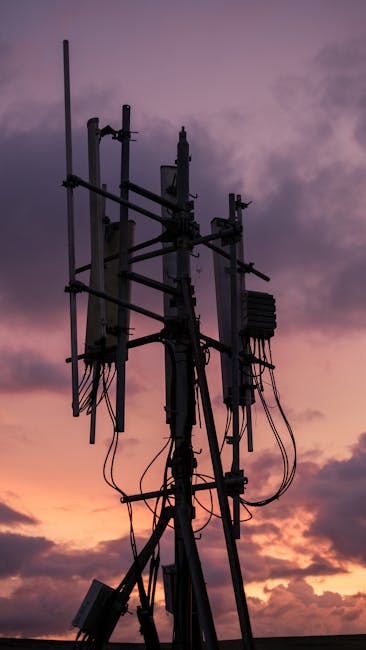
LEO satellites can also act as backhaul for remote cellular towers, strengthening existing mobile networks. They can provide capacity where it’s most needed.
This hybrid approach ensures a more robust and pervasive mobile experience. It complements terrestrial infrastructure rather than solely replacing it.
New Frontiers in Satellite Technology and Applications
The proliferation of LEO constellations is driving innovation across the satellite industry. Miniaturization of satellites, advanced propulsion systems, and AI-powered ground control are all rapidly advancing.
These advancements enable a wider range of sophisticated applications beyond basic internet access.
Earth Observation and Environmental Monitoring
LEO satellites are ideal for Earth observation due to their proximity and speed. They can capture high-resolution imagery and data with increased frequency.
This data is invaluable for climate change research, disaster monitoring, precision agriculture, and urban planning. It provides real-time insights into our planet’s condition.


Space-Based Manufacturing and Research
The unique microgravity environment of LEO presents opportunities for novel manufacturing and scientific research. Producing advanced materials or conducting experiments in orbit can yield groundbreaking results.
Future LEO stations might host commercial research labs and specialized production facilities. This could lead to the development of new medicines, materials, and technologies not possible on Earth.
Challenges and Considerations
Despite the immense potential, the rise of LEO constellations presents several challenges that require careful management and mitigation. These concerns span from orbital debris to regulatory frameworks.
Addressing these issues proactively is essential for the sustainable growth of space-based services.
Orbital Debris and Space Traffic Management
The sheer number of satellites being launched into LEO raises concerns about orbital debris. Collisions between satellites or debris can create more fragments, posing a significant risk to operational spacecraft.
Effective space traffic management systems and international cooperation are vital to prevent Kessler syndrome, a scenario where the density of debris makes space unusable.
Light Pollution and Astronomical Observation
The brightness of LEO satellites as they reflect sunlight can interfere with ground-based astronomical observations. This light pollution can hinder scientific research and the discovery of celestial objects.
Satellite operators are working on mitigation strategies, such as coating satellites with less reflective materials or adjusting their orbits during sensitive observation periods.

Regulatory Hurdles and Spectrum Allocation
The global deployment of LEO constellations requires complex international coordination and regulatory approvals. Allocating radio spectrum efficiently and equitably is a major challenge.
Governments and international bodies are working to establish clear guidelines to govern satellite operations, debris mitigation, and spectrum usage. This ensures fair competition and the responsible use of space.
The Future of Connectivity: LEO’s Enduring Role
The impact of low-earth orbit satellite constellations is a testament to human innovation and our drive to connect the world. As technology advances, we can expect LEO networks to become even more sophisticated and integrated.
They will play a pivotal role in ensuring ubiquitous, high-speed connectivity for everyone, everywhere. This will unlock new possibilities and drive progress across countless sectors.
Continued Technological Advancements
The miniaturization of components, advancements in solar power, and the development of more efficient propulsion systems will continue to improve LEO satellite capabilities. Future generations of satellites will be more powerful, durable, and cost-effective.
This ongoing innovation will drive down the cost of satellite services, making them even more accessible to a broader population. The pace of development is extraordinary.
Integration with 6G and Beyond
LEO constellations are expected to be a cornerstone of future communication networks, including 6G and subsequent generations. They will provide the global reach and high capacity needed for emerging technologies.
This seamless integration will create a truly interconnected world, supporting immersive experiences, advanced AI, and the Internet of Everything.

The ongoing evolution of LEO satellite technology promises a future where connectivity is no longer a barrier but a fundamental enabler of human potential and global progress.