

 MMM
MMM How Dynamic NFTs Are Changing the Landscape of Digital Assets
Remember 2021? It felt like everyone was talking about NFTs. Digital art, collectibles, those Bored Apes that sold for millions… it was a wild ride. But for the most part, these assets had one thing in common: they were static. A JPEG was a JPEG. Once minted on the blockchain, its core attributes were set in stone. It was a digital snapshot, a moment frozen in time. And that was cool, for a while. But what if a digital asset could do more? What if it could grow, change, and react to the world around it? That’s not a ‘what if’ anymore. That’s the reality of Dynamic NFTs, and they are completely rewriting the rules of digital ownership.
Forget the idea of a digital asset as a static picture on a wall. Instead, imagine a digital trading card of your favorite athlete whose stats update in real-time during a game. Picture a piece of digital art that changes its mood with the weather in your city. This is the world dNFTs (as they’re often called) are building, a world where digital assets are living, breathing entities. They’re not just receipts of ownership; they are interactive experiences. This shift from static to dynamic is arguably one of the most significant evolutions in the blockchain space since the invention of smart contracts themselves.
Key Takeaways
- Beyond Static: Dynamic NFTs (dNFTs) are a new class of non-fungible tokens whose metadata can change based on external conditions or data.
- The Tech Trio: They work using a combination of smart contracts (the rules), mutable metadata (the changeable info), and oracles (the data messengers from the outside world).
- Real-World Utility: Applications are exploding across gaming (leveling-up items), art (evolving masterpieces), ticketing (tickets that become souvenirs), and real estate (deeds that update automatically).
- Increased Engagement: By creating assets that evolve, dNFTs foster a deeper, long-term connection between the owner and the digital item, moving beyond simple speculation.

First, A Quick Refresher: The Static NFT
Before we jump into the deep end, let’s quickly touch on what most people think of when they hear ‘NFT’. A standard, static NFT is a unique token on a blockchain that represents ownership of a digital item. The crucial part is its metadata. This is the information that makes the NFT what it is—it includes the name, the description, and, most importantly, a link to the visual media (like a JPEG or GIF).
For a static NFT, this metadata is immutable. Once it’s written to the blockchain, it’s permanent. The artist’s name won’t change, the image it points to won’t change, its properties won’t change. This immutability is its strength; it guarantees authenticity and proves provenance. You know that the digital collectible you bought is the exact same one the creator minted. But it’s also its biggest limitation. It’s a photograph, not a movie.
Enter the Game-Changer: What Exactly Are Dynamic NFTs?
So, how do we get from a static photo to a living movie? The secret is in the metadata. Dynamic NFTs are built to allow their metadata to be changed. This change isn’t random; it’s controlled by a smart contract. The smart contract acts like a bouncer with a set of rules. It dictates what can change, when it can change, and why it can change.
Think of it like a character in a video game. When you start, your character is at Level 1. As you complete quests and gain experience (external data), your character levels up to Level 2, then 3, and so on. Their appearance might change, their stats improve, and they might gain new abilities. The character itself is the NFT, but its attributes—its metadata—are constantly evolving based on your actions. That’s a dynamic NFT in a nutshell.
This simple concept—making metadata changeable—unlocks a universe of possibilities. The asset is no longer just a thing you own; it’s a thing you interact with. It has a story. It has a history. Its value might not just be in its rarity, but in its journey.
How Do They Actually Work? The Tech Behind the Magic
Okay, so the metadata changes. But how? It’s not just some developer going in and editing a file. The process is automated, secure, and powered by some clever technology. It boils down to three key components working in harmony: the smart contract, the metadata, and a special messenger called an oracle.
- The Smart Contract: The Rulebook. This is the code that lives on the blockchain. For a dNFT, this contract is more complex than a standard one. It contains all the logic for the evolution. For example, the code might say: “IF the external data shows the temperature in New York is above 80°F, THEN change the NFT’s ‘background’ attribute from ‘snowy’ to ‘sunny’.” It’s the unchangeable constitution that governs the changeable asset.
- The Metadata: The Living Document. Unlike a static NFT where the metadata points to a file stored on a decentralized server like IPFS, a dNFT’s metadata is often constructed or modified by the smart contract itself. The contract fetches external information and uses it to update the NFT’s properties—its name, its description, or even the image it displays.
- The Oracle: The Messenger from the Real World. This is the real star of the show. Blockchains, by design, are closed systems. They can’t check the weather, look up stock prices, or see who won the Super Bowl. A blockchain oracle is a third-party service that acts as a secure bridge between the blockchain and the outside world. It finds and verifies real-world data and feeds it to the smart contract. Without oracles, dynamic NFTs couldn’t react to anything outside of their own little blockchain world.
Imagine you have a dNFT of a racehorse. The smart contract has a rule: “Update this horse’s ‘wins’ attribute every time it finishes first in a real-world race.” When a race happens, the oracle (like one from Chainlink, a popular oracle network) checks the official race results. It then securely reports the outcome to your smart contract on the blockchain. The smart contract verifies the data and updates the NFT’s metadata to reflect the win. Your digital horse now has a provably updated race record. It’s magic, but it’s just really smart code.
Real-World Applications: Where Dynamic NFTs Are Making an Impact
This isn’t just theory; dNFTs are already being used in incredible ways across various industries. The shift from a collectible to a functional, interactive asset is creating entirely new business models and user experiences.
Gaming: The Ultimate Use Case
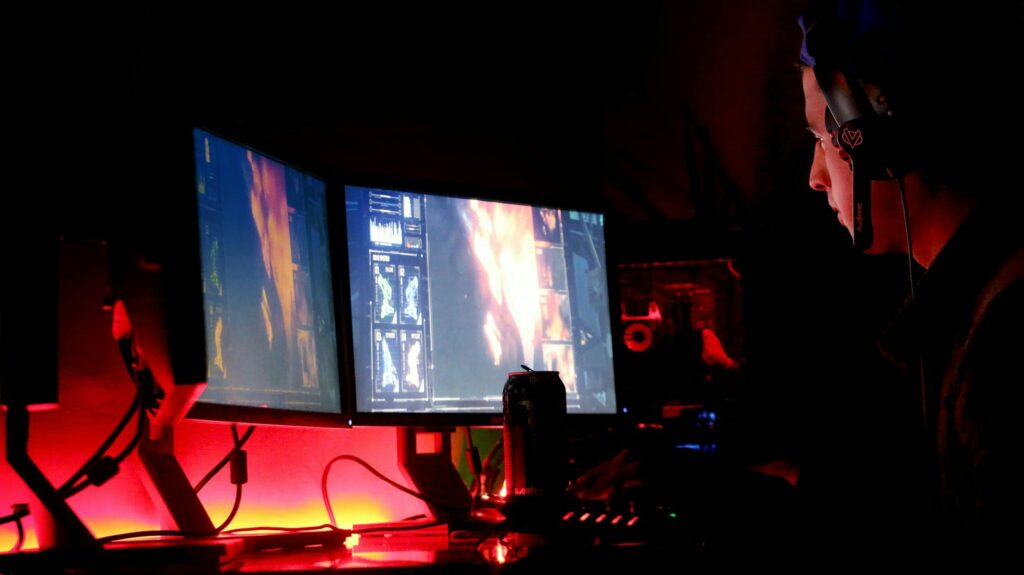
Gaming is the most natural fit for dynamic NFTs. For decades, gamers have poured hours into leveling up characters and finding rare items, but they never truly owned them. Those assets were stuck on the game’s servers. With dNFTs, that changes.
- Evolving Characters & Items: A player’s in-game sword could be an NFT. As the player defeats monsters, the sword’s metadata could update to reflect its new, higher damage stat. Its appearance could even change, gaining a glow after defeating a particularly powerful boss. This creates a unique, provable history for every single item.
- Player Avatars: Your main character could be a dNFT that visually changes as you complete achievements, learn new skills, or even just as it ‘ages’ over time. It becomes a true digital identity that reflects your personal journey in the game.
- Competitive Play: An NFT representing a player’s rank in a competitive game could automatically update at the end of each season, unlocking special perks or visual flairs for top performers.
Digital Art: A Living Canvas
Artists are exploring dNFTs to create works that were never before possible. The art is no longer a static image but a continuous performance.
- Responsive Artwork: An artist could create a piece that changes based on the time of day, displaying a sun during the day and a moon at night. Another piece could change its color palette based on the current price of Ethereum or the weather in Tokyo.
- Interactive Storytelling: A piece of art could evolve as its owner interacts with it, or as major world events unfold. The collector becomes a part of the art’s ongoing story, not just its final owner.
Ticketing and Memberships
The utility of a ticket is usually over once you walk through the gate. Dynamic NFTs turn them into valuable, evolving souvenirs and access passes.
- Evolving Souvenirs: A concert ticket NFT could initially just be a QR code for entry. After the show, the smart contract could automatically update it to display a high-resolution photo from the event or a video of the final song. It transforms from a utility into a unique, personalized collectible.
- Dynamic Memberships: A gym membership NFT could track your attendance. After 100 visits, the NFT could visually ‘level up’ and unlock a discount on merchandise. A brand’s loyalty pass could gain new perks and access over time, rewarding long-term holders.
Real Estate and Asset Management
While still in its early stages, the potential here is massive. A dNFT representing a piece of property could have its metadata updated to reflect its maintenance history, inspection results, or any liens placed against it. When the property is sold, the ownership transfer is just an update to the NFT’s core data, creating a transparent and always-current record of the asset’s history and status.
The Pros and Cons: A Balanced View
Like any groundbreaking technology, dynamic NFTs come with their own set of incredible advantages and notable challenges.
The Upside: Engagement, Utility, and Storytelling
The biggest pro is the leap in engagement. Owners are no longer passive spectators; they are active participants in the asset’s life. This creates a much stronger bond and a reason to hold onto an asset long-term, beyond pure financial speculation. The added utility turns NFTs from simple collectibles into functional tools, like access keys, identities, and updatable records. Finally, they enable powerful storytelling, where the history of an asset’s changes is as valuable as the asset itself.
The Challenges: Complexity, Oracle Reliance, and Gas Fees
On the flip side, dNFTs are inherently more complex to create and manage. More code means more potential bugs or vulnerabilities. There’s also a heavy reliance on oracles. If the oracle network goes down or provides bad data, the NFT won’t update correctly. This introduces a degree of centralization risk that developers must carefully manage. Finally, every time a dNFT’s metadata is updated, it requires a transaction on the blockchain, which can incur gas fees. For NFTs that change frequently, these costs could add up, although solutions on Layer 2 blockchains are making this less of an issue.
Conclusion: The Future is Fluid
Dynamic NFTs represent a fundamental maturation of the digital asset space. We are moving away from the simple, static ‘digital bragging rights’ of the first wave and into a new era of functional, interactive, and evolving digital property. The ability to connect a digital asset to real-world data and events is not just a novelty; it’s a paradigm shift.
The true potential is still being uncovered. Imagine a digital resume NFT that automatically updates with verified certifications, or a health-tracking NFT that evolves as you meet your fitness goals. The line between our physical and digital lives continues to blur, and dynamic NFTs are a key piece of the bridge being built between them. The digital world is no longer standing still, and neither are its assets.
FAQ
Are dynamic NFTs less secure than static NFTs?
Not inherently, but they are more complex. The security of a dNFT depends on the quality of its smart contract code and the reliability of the oracle it uses. A well-audited smart contract from a reputable developer is just as secure. The added complexity, however, does increase the surface area for potential vulnerabilities if not coded carefully.
Can any static NFT be turned into a dynamic one?
Generally, no. A standard static NFT is minted with a smart contract that doesn’t include the functions needed to change the metadata. To be dynamic, an NFT must be created from the ground up with a smart contract specifically designed to allow for and manage these changes based on external inputs.
What’s the main difference between a dynamic NFT and just editing an NFT?
The key difference is automation and trustlessness. Anyone with control over a centralized server could ‘edit’ an NFT’s image. A dynamic NFT, however, changes automatically based on predefined rules in a decentralized smart contract. The changes are triggered by verified data from an oracle, not by a single person or company. This process is transparent, verifiable on the blockchain, and doesn’t rely on trusting a central party to make the updates correctly.


 Backtest Crypto Trading Strategies: A Complete Guide
  NFT Standards: A Cross-Chain Guide for Creators & Collectors
  Decentralized Storage: IPFS & Arweave Explained Simply
  How to Calculate Cryptocurrency Taxes: A Simple Guide
  Your Guide to Music NFTs & Top Platforms for 2024
  TradingView for Crypto: The Ultimate Trader’s Guide
  Backtest Crypto Trading Strategies: A Complete Guide
  NFT Standards: A Cross-Chain Guide for Creators & Collectors
  Decentralized Storage: IPFS & Arweave Explained Simply
  How to Calculate Cryptocurrency Taxes: A Simple Guide
  Your Guide to Music NFTs & Top Platforms for 2024
  TradingView for Crypto: The Ultimate Trader’s Guide