

Understanding Small Language Models (SLMs) and On-Device Edge Computing
- Understanding Small Language Models (SLMs) and On-Device Edge Computing
- Understanding Understanding Small Language Models Slms
- The Rise of Small Language Models (SLMs)
- On-Device Edge Computing Explained
- The Synergy: SLMs Powering On-Device Edge AI
- Technical Considerations for SLM Deployment
- The Environmental Impact of SLMs
- Conclusion: The Dawn of Ubiquitous, Private AI
Understanding Understanding Small Language Models Slms
This guide covers everything you need to know about understanding small language models slms.
Understanding small language models (SLMs) is becoming increasingly crucial as they revolutionize how we interact with technology. These compact yet powerful AI systems are enabling a new era of efficient and private computation, especially when paired with on-device edge computing.
Table of Contents
Unlike their larger counterparts, SLMs are designed for efficiency, requiring fewer computational resources and less data to train and operate. This makes them ideal for deployment on a wide range of devices, from smartphones to IoT sensors.
The integration of SLMs with on-device edge computing represents a significant leap forward. It allows complex AI tasks to be performed locally, directly on the device, rather than relying on remote servers.
This shift promises enhanced privacy, reduced latency, and greater reliability. It opens up possibilities for advanced AI applications that were previously unfeasible due to connectivity or processing constraints.
The Rise of Small Language Models (SLMs)
The landscape of artificial intelligence is often dominated by discussions of massive, general-purpose models. However, a significant trend is emerging with the development and adoption of Small Language Models (SLMs). These models offer a compelling alternative, delivering powerful natural language processing capabilities in a more accessible package.
SLMs are essentially LLMs that have been specifically optimized for size and computational efficiency. They achieve this through various techniques, including model compression, efficient architectures, and targeted training datasets. The result is a model that can perform a wide array of language tasks with significantly reduced resource requirements.
Understanding small language models (SLMs) means appreciating their strategic advantage in democratizing AI. They lower the barrier to entry for integrating advanced NLP into a broader spectrum of applications and devices.
This miniaturization doesn’t mean a sacrifice in performance for many tasks. For specific, well-defined use cases, SLMs can rival or even outperform larger models, especially when precision and focus are prioritized.
Key Characteristics of SLMs
- Reduced Size: SLMs have a significantly smaller footprint in terms of parameters and memory requirements compared to large language models (LLMs). This makes them easier to store and deploy.
- Lower Computational Cost: Training and running SLMs demand less processing power and energy. This translates to lower operational costs and environmental impact.
- Faster Inference: Due to their optimized design, SLMs can process requests and generate responses much more quickly.
- Specialized Capabilities: While LLMs aim for broad general knowledge, SLMs can be fine-tuned for specific domains or tasks, leading to higher accuracy in those areas.
- Privacy-Preserving: Their ability to run locally on a device enhances user data privacy as information doesn’t need to be sent to external servers for processing.
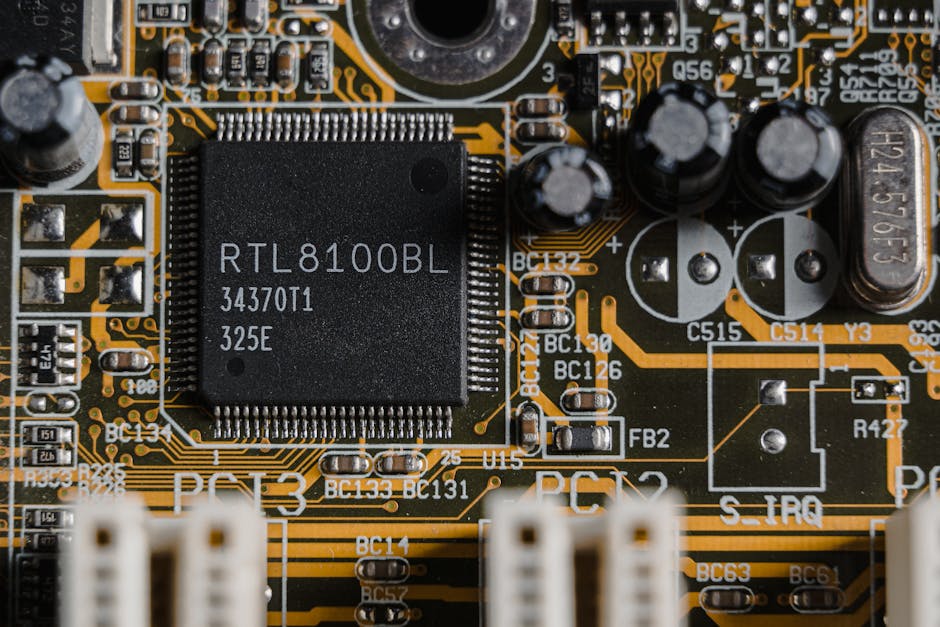
On-Device Edge Computing Explained
Edge computing is a distributed computing paradigm that brings computation and data storage closer to the sources of data. Instead of sending data to a centralized cloud for processing, edge computing processes it near the physical location where it is generated.
This approach is particularly revolutionary for AI applications. By moving computation to the “edge” of the network, devices can make faster, more intelligent decisions without the latency associated with cloud round-trips.
On-device edge computing is the most granular form of edge computing, where the processing happens directly on the end-user device itself, such as a smartphone, smart speaker, or an industrial sensor. This is where SLMs truly shine.
The benefits are profound. Imagine a smart camera that can analyze video feeds for security threats in real-time, directly on the camera, without sending any footage off-site. This is the power of on-device edge computing.
Advantages of Edge AI
- Reduced Latency: Immediate processing means faster responses, crucial for applications like autonomous vehicles or real-time industrial monitoring.
- Enhanced Bandwidth Efficiency: Less data needs to be transmitted to the cloud, saving bandwidth and reducing costs.
- Improved Reliability: Applications can continue to function even with intermittent or no internet connectivity.
- Increased Security and Privacy: Sensitive data can be processed locally, reducing the risk of breaches during transmission.
- Scalability: Distributing computation across many devices can offer a more scalable solution than a single centralized server.
The Synergy: SLMs Powering On-Device Edge AI
The combination of Small Language Models (SLMs) and on-device edge computing is a powerful synergy. SLMs provide the intelligence, and edge computing provides the platform for that intelligence to operate efficiently and locally.
This pairing unlocks a new generation of AI-powered devices. These devices can understand commands, analyze data, and provide intelligent insights directly where they are needed, when they are needed.
For example, a personal assistant on your smartphone could process voice commands and perform complex tasks like summarizing emails or drafting replies using an on-device SLM. All of this happens without your personal data ever leaving your device.
This level of privacy and responsiveness was previously unattainable with larger, cloud-dependent models. Understanding small language models (SLMs) in this context highlights their role as enablers of a more distributed and user-centric AI future.
Use Cases and Applications
The practical applications of SLMs running on edge devices are vast and growing rapidly. Here are just a few examples:
Smartphones: On-device AI for personalized recommendations, enhanced camera features, real-time translation, and improved voice assistants. SLMs enable these sophisticated functions to run smoothly without draining battery life or requiring constant internet access.
Wearable Devices: Fitness trackers and smartwatches can leverage SLMs for advanced health monitoring, providing insights into sleep patterns, activity levels, and even detecting potential health anomalies in real-time. This data remains private and instantly accessible.
Internet of Things (IoT) Devices: Smart home devices, industrial sensors, and agricultural monitors can use SLMs to analyze local data and make autonomous decisions. For instance, a smart thermostat could learn user preferences and optimize energy usage without sending occupancy data to the cloud.
Automotive: In-car systems can utilize SLMs for voice control, driver assistance features, and personalized infotainment experiences. This enhances safety and convenience by providing immediate responses and reducing reliance on cellular networks.
Healthcare: Portable medical devices could analyze patient data locally for preliminary diagnoses or monitoring of chronic conditions. This allows for quicker interventions and better patient care, especially in remote areas.

Technical Considerations for SLM Deployment
Deploying SLMs on edge devices involves several technical considerations to ensure optimal performance and efficiency. These models, while small, still require careful management of computational resources.
Hardware Acceleration: Many modern edge devices are equipped with specialized hardware like NPUs (Neural Processing Units) or GPUs designed to accelerate AI computations. Leveraging these is critical for achieving high inference speeds.
Model Optimization Techniques: Quantization, pruning, and knowledge distillation are techniques used to further reduce the size and computational demands of SLMs without significantly impacting accuracy. These are essential for fitting models onto resource-constrained devices.
Efficient Data Handling: Even though processing is local, efficient management of input and output data is still important. This includes optimizing data preprocessing pipelines and managing memory effectively.
Power Management: Battery life is a significant concern for many edge devices. SLMs are chosen precisely for their lower power consumption, but developers must still carefully manage their usage to maximize device uptime.
Security of On-Device Models: Protecting the SLM and the data it processes on the device is paramount. Techniques like on-device encryption and secure enclaves can help safeguard against unauthorized access and tampering.
Challenges and Future Trends
While the progress is remarkable, challenges remain. Ensuring broad compatibility across diverse hardware platforms is an ongoing effort. Developers are also working to improve the generalizability of SLMs, making them more adaptable to a wider range of unforeseen tasks.
The future points towards even more sophisticated and capable SLMs. We can anticipate models that are smaller, faster, and more energy-efficient, while still performing complex reasoning and generation tasks. The trend of on-device AI will only accelerate.
Expect to see more powerful AI assistants that operate entirely on your personal devices, offering unparalleled privacy and responsiveness. The continuous innovation in SLM architectures and edge hardware will drive this evolution.

The Environmental Impact of SLMs
A significant, often overlooked, benefit of understanding small language models (SLMs) is their positive environmental impact compared to their larger counterparts. Training and running massive LLMs consume substantial amounts of energy, contributing to carbon emissions.
SLMs, by their very nature, require far less computational power for both training and inference. This drastically reduces the energy footprint associated with their operation.
When deployed on edge devices, this energy efficiency becomes even more pronounced. Instead of powering massive data centers, computation is distributed across numerous low-power devices.
This shift towards more efficient AI models aligns with global efforts to create more sustainable technology. It’s a critical step in ensuring that the advancement of AI is also environmentally responsible.
The ability to perform complex tasks locally on devices like smartphones means less data transmission, which further conserves energy across the network infrastructure.

Conclusion: The Dawn of Ubiquitous, Private AI
The convergence of understanding small language models (SLMs) and on-device edge computing is ushering in a new era of artificial intelligence. It promises a future where intelligent capabilities are not confined to powerful servers but are seamlessly integrated into the devices we use every day.
This evolution offers tangible benefits: enhanced privacy, reduced latency, greater reliability, and more sustainable AI practices. As SLMs continue to evolve and edge hardware becomes more capable, the possibilities for on-device AI applications will only expand.
From smarter personal devices to more responsive industrial systems, the impact of SLMs on edge computing will be profound and far-reaching. This is not just a technological advancement; it’s a shift towards a more private, efficient, and ubiquitous AI experience for everyone.

