

Cultivating Critical Thinking: Empowering Students for Future Challenges
- Cultivating Critical Thinking: Empowering Students for Future Challenges
- What is Critical Thinking, and Why is it Essential?
- The Core Components of Critical Thinking in the Classroom
- Practical Strategies for Cultivating Critical Thinking: Empowering Students for Future Challenges
- The Educator's Role in the Process of Cultivating Critical Thinking: Empowering Students for Future Challenges
- Assessing Critical Thinking Skills: Moving Beyond Standardized Tests
- The Long-Term Impact: Lifelong Learners and Engaged Citizens
The mission of Cultivating Critical Thinking: Empowering Students for Future Challenges is the single most important objective in modern education. In a world defined by rapid technological change, misinformation, and complex global problems, the ability to think clearly, critically, and independently is no longer a luxury—it is an essential survival skill. This guide delves into the core principles and actionable strategies educators can use to foster these vital cognitive abilities in their students.
Simply memorizing facts and figures is an outdated model of learning. True education equips students with the mental tools to analyze information, evaluate arguments, identify biases, and formulate reasoned judgments. It’s about moving from being passive recipients of knowledge to active creators of understanding.
What is Critical Thinking, and Why is it Essential?
At its core, critical thinking is the objective analysis and evaluation of an issue in order to form a judgment. It is a disciplined process of actively and skillfully conceptualizing, applying, analyzing, synthesizing, and evaluating information. This information is gathered from, or generated by, observation, experience, reflection, reasoning, or communication, as a guide to belief and action.
This skill set is the bedrock of innovation and problem-solving. It allows individuals to navigate ambiguity and complexity, making it a cornerstone for success not just in academia, but in every facet of personal and professional life. The process of Cultivating Critical Thinking: Empowering Students for Future Challenges is about building this fundamental capacity.

Alt Text: Cultivating Critical Thinking: Empowering Students for Future Challenges
Beyond Rote Memorization: Defining the Skill
Critical thinking transcends simple information recall. A student can recite the timeline of a historical event without ever questioning the perspectives of those involved or the long-term consequences of their actions. Rote learning fills a temporary vessel; critical thinking builds a permanent intellectual framework.
This framework involves curiosity, skepticism, and humility. It encourages students to ask “Why?” and “How?” rather than just “What?”. This shift transforms learning from a passive activity into an engaging, dynamic process of discovery.
The Pillars of Critical Thinking: Analysis, Interpretation, and Evaluation
These three pillars are foundational. Analysis is the ability to break down complex information into its constituent parts to better understand its structure and relationships. Students learn to identify key arguments, assumptions, and evidence presented in a text, speech, or data set.
Interpretation involves deciphering the meaning and significance of that information. Evaluation is the final step, where students assess the credibility, relevance, and strength of the evidence and arguments to form a reasoned conclusion. A great classroom exercise involves having students design and budget a school event, requiring them to source everything from food to affordable wedding and events accessories for decorations, evaluating each choice based on cost and quality.
Preparing for an Unpredictable Future
We are preparing students for jobs that may not yet exist, using technologies that haven’t been invented to solve problems we don’t even know are problems yet. In this context, specific vocational skills can become obsolete quickly. For more information on this, consult leading educational research from institutions like Harvard’s Graduate School of Education .
The one constant is the need for an agile, adaptable mind. The successful effort of Cultivating Critical Thinking: Empowering Students for Future Challenges ensures that students are not just prepared for their first job, but for a lifetime of learning, adaptation, and contribution in a perpetually evolving world.
The Core Components of Critical Thinking in the Classroom
To effectively teach critical thinking, educators must understand its core components. These are the cognitive gears that work together to power sophisticated analysis and problem-solving. Integrating these components into daily instruction is key to building a culture of inquiry.
From understanding one’s own thought processes to recognizing logical fallacies, these elements are the building blocks of a critically aware mind. They empower students to approach any subject with depth and intellectual rigor.
Metacognition: Thinking About Thinking
Metacognition is the foundation of self-regulated learning. It involves students becoming aware of their own thought processes, monitoring their understanding, and adjusting their learning strategies accordingly. It’s the internal dialogue that asks, “Do I really understand this?” or “What strategy could I use to solve this problem more effectively?”.
Teachers can foster metacognition through reflective journals, “think-aloud” problem-solving sessions, and asking students to explain their reasoning, not just their answers. This self-awareness is a critical step in becoming an independent learner. Explore our resources on student-led learning techniques for more ideas.

Image Alt Text: A diverse group of students collaborating on a project, demonstrating analytical skills.
Image Suggestion: A close-up shot of a student’s journal with mind maps and reflective questions, illustrating the process of metacognition.
Recognizing and Overcoming Cognitive Biases
Everyone is susceptible to cognitive biases—systematic patterns of deviation from norm or rationality in judgment. Confirmation bias, for instance, is the tendency to search for, interpret, favor, and recall information that confirms pre-existing beliefs. Understanding these biases is crucial for objective analysis.
Educators can introduce common biases and have students identify them in media, historical accounts, or even their own arguments. This training in intellectual self-defense is vital for digital literacy, especially when they encounter information shared through custom short links on social media, which can obscure the original source.
The Role of Logic and Reasoning
Logic provides the structure for sound argumentation. Students must learn to differentiate between deductive reasoning (moving from general principles to specific conclusions) and inductive reasoning (drawing general conclusions from specific observations). They must also learn to identify logical fallacies that weaken an argument.
Activities like formal debates, analyzing persuasive essays, or even deconstructing advertisements can sharpen these skills. Understanding the logical structure of an argument is essential for both building one’s own case and evaluating the claims of others.
Practical Strategies for Cultivating Critical Thinking: Empowering Students for Future Challenges
Theory is important, but practical application is where real learning occurs. Shifting a classroom from a teacher-centered to a student-centered model requires a toolkit of effective strategies. These methods encourage active participation, collaboration, and deep intellectual engagement.
The goal is to create an environment where questioning is encouraged, and thinking is made visible. Here are some of the most effective, research-backed strategies for achieving the goal of Cultivating Critical Thinking: Empowering Students for Future Challenges.
Inquiry-Based Learning and Project-Based Learning (PBL)
Inquiry-based learning starts with a question, a problem, or a puzzle. Instead of presenting facts, the teacher guides students as they explore the topic, conduct research, and construct their own understanding. This process naturally hones analytical and problem-solving skills.
Project-Based Learning (PBL) takes this a step further by having students engage in a long-term, complex project to solve a real-world problem. A PBL unit might involve students designing a marketing plan for a local business, where they must analyze the pros and cons of using a WhatsApp ecommerce solution versus traditional methods. This provides an authentic context for applying critical thinking skills.
The Socratic Method: The Power of Questioning
The Socratic method is a form of cooperative argumentative dialogue between individuals, based on asking and answering questions to stimulate critical thinking. It is a disciplined questioning technique that can be used to explore complex ideas, get to the truth of things, and uncover assumptions.
Instead of giving answers, a teacher using this method asks probing questions that force students to examine their own beliefs and the validity of their reasoning. This models a process of intellectual inquiry that students can internalize and apply independently. An excellent resource for this is the Foundation for Critical Thinking .
Fostering Debate and Collaborative Problem-Solving
Structured debates and group problem-solving activities teach students to articulate their ideas clearly, listen to opposing viewpoints, and synthesize different perspectives to reach a consensus or a more nuanced understanding. This builds not only critical thinking but also crucial communication and collaboration skills.
For example, a group could be tasked with improving the efficiency of a system for event ticket booking on WhatsApp for a school fundraiser. This requires them to analyze the current process, brainstorm solutions, evaluate feasibility, and present a collaborative recommendation, defending their choices with evidence.

Image Alt Text: A teacher facilitating a Socratic seminar with students seated in a circle.
Image Suggestion: A split-screen image showing a traditional lecture-style classroom on one side and a dynamic, collaborative project-based learning environment on the other.
Integrating Technology for Deeper Analysis
Technology can be a powerful tool for developing critical thinking. Digital tools allow students to access vast amounts of information, use data visualization software to identify patterns, and collaborate with peers and experts globally. The key is to use technology not just for consumption, but for creation and analysis.
Students can use spreadsheets to analyze scientific data, digital archives to research primary historical sources, or coding platforms to design solutions to problems. Technology, when used thoughtfully, can amplify and accelerate the process of Cultivating Critical Thinking: Empowering Students for Future Challenges.
The Educator’s Role in the Process of Cultivating Critical Thinking: Empowering Students for Future Challenges
The teacher is the most critical element in fostering a thinking-centered classroom. Their role must evolve from being a “sage on the stage” to a “guide on the side.” This requires a fundamental shift in mindset, pedagogy, and classroom management.
An educator who models curiosity, values questions over answers, and creates a supportive intellectual environment is essential. The success of Cultivating Critical Thinking: Empowering Students for Future Challenges hinges on the teacher’s ability to facilitate this journey.
Shifting from Lecturer to Facilitator
A facilitator of learning creates experiences that allow students to construct their own knowledge. They design challenging problems, provide resources, ask probing questions, and guide students through their intellectual struggles without simply providing the answers. This shift empowers students and fosters a sense of ownership over their learning.
This approach requires patience and a willingness to let go of control. The messiness of authentic inquiry can be challenging, but it is where the most profound learning happens. Our teacher development programs can help with this transition.
Creating a Safe Environment for Intellectual Risk-Taking
Students will not engage in critical thinking if they fear being wrong. A classroom must be a safe space where mistakes are viewed as learning opportunities, and all serious ideas are treated with respect. Without psychological safety, students will default to providing the “correct” answer rather than exploring novel or challenging ideas.
Teachers can build this environment by celebrating thoughtful questions, acknowledging their own uncertainties, and establishing clear norms for respectful debate and disagreement. The goal is to build a community of thinkers.
Providing Constructive, Actionable Feedback
Feedback is crucial for growth. When assessing critical thinking, feedback should focus on the student’s process, not just the final product. Instead of just marking an answer wrong, a teacher might ask, “What evidence supports this claim?” or “Have you considered this alternative perspective?”.
This type of feedback guides students to improve their reasoning and analytical skills. It makes the criteria for good thinking explicit and gives students a clear path for improvement, which is a key part of Cultivating Critical Thinking: Empowering Students for Future Challenges.
Assessing Critical Thinking Skills: Moving Beyond Standardized Tests
One of the greatest challenges is assessment. Traditional multiple-choice tests are often poor measures of a student’s ability to think critically. They tend to reward memorization over deep, analytical thought. Authentic assessment methods are needed to capture these complex skills.
Effective assessment should require students to apply their knowledge in novel situations, construct arguments, and solve complex problems. These methods provide a much richer picture of a student’s cognitive abilities.
Using Rubrics for Complex Tasks
For projects, essays, and presentations, a well-designed rubric is an invaluable tool. A rubric can break down a complex skill like “argumentation” into specific, observable components like “identifies and evaluates key assumptions,” “uses high-quality evidence,” and “acknowledges counterarguments.”
This clarifies expectations for students and makes grading more objective and consistent for teachers. It shifts the focus from a single score to a profile of strengths and areas for growth. It is an indispensable part of Cultivating Critical Thinking: Empowering Students for Future Challenges.
Portfolio Assessments and Reflective Journals
A portfolio allows students to collect their work over time, demonstrating their growth and development. It can include a variety of artifacts, from research papers and lab reports to creative projects and self-assessments. Portfolios provide a holistic view of a student’s capabilities.
Reflective journals, where students write about their learning process, their challenges, and their “aha” moments, offer direct insight into their metacognitive development. They provide a narrative of the student’s intellectual journey.
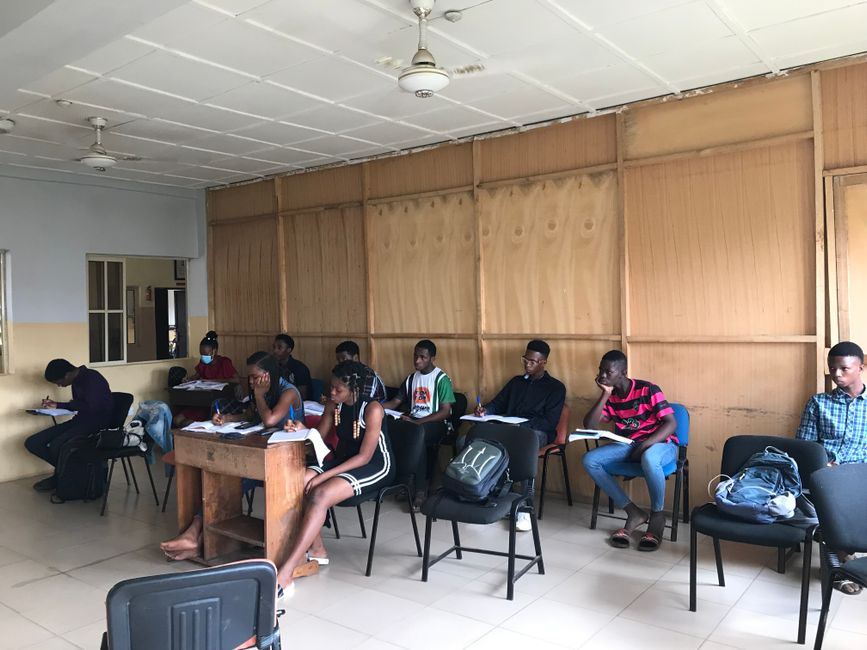
Image Alt Text: A detailed assessment rubric for a critical thinking project.
Image Suggestion: A collage of student portfolio work, including essays, diagrams, project photos, and journal entries.
Performance-Based Assessments
Performance-based assessments require students to perform a task or create a product that demonstrates their knowledge and skills. This could be a scientific experiment, a historical debate, a mathematical modeling project, or engineering a solution to a problem. For a STEM class, this might involve a challenge where students must find the best tools and hardware deals online to build a functioning prototype within a strict budget.
These tasks are authentic and directly measure the skills we want students to develop. They assess what students can do with their knowledge, which is the ultimate goal of education and a perfect example of Cultivating Critical Thinking: Empowering Students for Future Challenges in action.
The Long-Term Impact: Lifelong Learners and Engaged Citizens
The benefits of critical thinking extend far beyond the classroom walls. This foundational skill set is essential for navigating the complexities of modern life, contributing to the workforce, and participating in a democratic society.
Ultimately, the goal is to develop individuals who are not just knowledgeable, but are also thoughtful, discerning, and engaged. It is about fostering a generation capable of tackling the world’s most pressing issues with reason, creativity, and empathy.
Enhancing Digital Literacy and Media Consumption
In an age of information overload and “fake news,” the ability to critically evaluate sources is paramount. Students trained in critical thinking are better equipped to identify bias, verify information, and distinguish between credible journalism and manipulation. The National Association for Media Literacy Education offers a wealth of resources on this topic.
They learn to question who is creating a message, what their purpose is, and what techniques they are using to persuade. This is an essential skill for informed citizenship. For example, they can analyze the efficiency of a proposal to automate WhatsApp business for school-to-parent communication, weighing the benefits against potential privacy concerns.
Fostering Innovation and Creativity
Critical and creative thinking are two sides of the same coin. Critical thinking is required to analyze a problem and evaluate potential solutions, while creative thinking is needed to generate those solutions in the first place. Innovation rarely comes from accepting the status quo.
By encouraging students to question assumptions and explore unconventional ideas, we lay the groundwork for future innovators, entrepreneurs, and artists. The entire process of Cultivating Critical Thinking: Empowering Students for Future Challenges is an investment in a more innovative and prosperous future.
Building Resilient and Adaptable Individuals
Life is full of unexpected challenges and setbacks. Critical thinking fosters intellectual resilience by teaching individuals how to approach problems systematically, learn from failure, and adapt their strategies. It promotes a growth mindset, the belief that abilities can be developed through dedication and hard work.
Students who are confident in their ability to think through problems are better equipped to handle academic, personal, and professional adversity. They become lifelong learners, capable of navigating a future that is guaranteed to be complex and unpredictable. This is the ultimate promise and purpose of education.

