

Understanding The Future Of Physical Ai
# The Future of Physical AI: Integrating Vision-Language-Action Models in Robotics
The future of physical AI is rapidly evolving, driven by groundbreaking advancements in integrating vision, language, and action models. This convergence is enabling robots to understand their environment, communicate with humans, and perform complex physical tasks with unprecedented autonomy. We are moving beyond pre-programmed machines to intelligent agents that can learn, adapt, and collaborate.
The synergy between these three modalities is creating a paradigm shift. Robots can now “see” the world through advanced computer vision, “understand” instructions and context through natural language processing, and “act” upon their environment with sophisticated robotic manipulation. This holistic approach is key to unlocking the full potential of artificial intelligence in physical systems.
## The Foundation: Vision, Language, and Action Unpacked
To truly grasp the future of physical AI, it’s essential to understand the individual components and how they are becoming increasingly interconnected.
### Computer Vision: The Robot’s Eyes
Computer vision has been a cornerstone of robotics for decades. However, recent leaps in deep learning have dramatically enhanced a robot’s ability to perceive and interpret visual data. This includes object recognition, scene understanding, and even predicting the intent of other agents.
State-of-the-art vision models can now process complex visual information in real-time. They can differentiate between countless objects, understand spatial relationships, and track movement with remarkable accuracy. This forms the bedrock for intelligent physical interaction.
### Natural Language Processing (NLP): The Robot’s Ears and Voice
NLP allows robots to understand human language, whether spoken or written. This is crucial for intuitive human-robot interaction. Imagine a robot that can follow verbal commands like “pick up the red cup on the table and place it next to the blue box.”
Advanced NLP models can interpret nuance, context, and even sentiment. This moves us closer to natural conversations with machines, making them more accessible and user-friendly in various applications.
### Action Models: The Robot’s Hands and Feet
Action models, often rooted in reinforcement learning and motion planning, govern how robots execute physical tasks. This involves precise control of actuators, navigation through complex spaces, and dexterous manipulation of objects.
The integration of vision and language with action models allows robots to perform tasks that are not just repetitive but also dynamic and context-aware. They can adjust their actions based on what they see and what they are told.

## The Convergence: Vision-Language-Action (VLA) Models
The true revolution lies in the seamless integration of these components into unified Vision-Language-Action (VLA) models. These models learn to connect visual perception with linguistic understanding and translate that into effective physical actions.
VLA models are trained on vast datasets that pair visual inputs with textual descriptions and corresponding actions. This allows them to develop a generalized understanding of how the world works and how to interact with it. This is a significant step towards more general-purpose intelligent robots.
### How VLA Models Work
At their core, VLA models often employ transformer architectures, similar to those used in large language models. These architectures are adept at handling sequential data and learning complex relationships.
The model takes visual input (images or video streams) and textual input (commands or descriptions). It then processes these to generate an output that guides the robot’s physical actions. This might be a sequence of motor commands, a trajectory for a robotic arm, or navigation instructions.
### Benefits of VLA Integration
The benefits of VLA integration are profound. Robots become more adaptable, capable of performing tasks they haven’t been explicitly programmed for. They can generalize their knowledge to new situations and objects.
This also leads to more robust and safer human-robot collaboration. Robots can better understand human intentions and react appropriately, minimizing risks.
## Real-World Applications and the Future of Physical AI
The impact of these advancements is already being felt across various sectors. The future of physical AI is not a distant dream; it’s unfolding now.
### Manufacturing and Logistics
In factories, VLA-enabled robots can handle complex assembly tasks, quality control, and dynamic reconfigurations of production lines. In warehouses, they can navigate cluttered environments, identify and retrieve specific items, and optimize inventory management.
These robots can learn new assembly procedures by simply observing human workers or being given new textual instructions, dramatically reducing setup times. Their ability to understand spoken commands makes them invaluable for on-the-fly adjustments.
### Healthcare and Elderly Care
Robots equipped with VLA capabilities can assist in patient care, from delivering medication to helping with mobility. Their natural language understanding allows for empathetic interaction, and their vision systems can monitor patient well-being.
They can also be trained to perform delicate medical procedures under human supervision, guided by both visual cues and verbal instructions. This augments the capabilities of healthcare professionals.
### Domestic Assistance and Personal Robots
The dream of a helpful robot in every home is closer than ever. VLA models can enable robots to understand household chores, learn new routines, and interact safely with children and pets.
Imagine a robot that can follow your verbal request to “tidy up the living room” by identifying objects, understanding what belongs where, and then performing the task. This level of autonomy and understanding is revolutionary.

## Challenges and the Road Ahead
Despite the remarkable progress, several challenges remain on the path to widespread adoption of sophisticated physical AI.
### Data Scarcity and Generalization
While VLA models are data-hungry, acquiring diverse and high-quality datasets that cover all possible real-world scenarios is a significant challenge. Ensuring models generalize well to unseen environments and tasks is an ongoing research area.
Current models often perform best in controlled environments. Real-world complexity, with its unpredictable lighting, occlusions, and novel objects, still poses a hurdle.
### Safety and Reliability
Ensuring the safety and reliability of physical AI systems is paramount, especially when they operate in close proximity to humans. Rigorous testing and validation are crucial to prevent accidents.
Developing robust error detection and recovery mechanisms is vital. If a robot misunderstands a command or encounters an unexpected obstacle, it needs to be able to react safely and intelligently.
### Computational Resources and Cost
Training and deploying advanced VLA models require substantial computational power, which can be expensive. Bringing down the cost of these systems is essential for broader accessibility.
The hardware requirements for advanced perception, processing, and actuation also contribute to the overall cost. Innovations in efficient algorithms and specialized hardware are key to addressing this.

## The Evolving Landscape of Robotics
The integration of VLA models signifies a paradigm shift in robotics, moving beyond purely reactive or pre-programmed machines to more proactive and adaptive intelligent agents.
### Embodied AI and Learning
VLA models are a critical component of “embodied AI,” where intelligence is not just abstract but enacted through a physical body. This allows AI to learn through interaction with the physical world, much like humans do.
This embodied learning can lead to more robust and intuitive understanding, as the AI directly experiences the consequences of its actions. The physical interaction closes the loop between perception, cognition, and action.
### Human-Robot Teaming
The ultimate goal for many is seamless human-robot teaming. VLA models are paving the way for robots that can act as true partners, understanding human goals and collaborating to achieve them efficiently.
This isn’t just about robots taking over tasks; it’s about augmenting human capabilities and creating more productive and enjoyable work environments. The synergy between human intuition and AI’s precision can unlock new levels of innovation.
### Ethical Considerations
As physical AI becomes more capable, ethical considerations become increasingly important. This includes issues of job displacement, accountability for robot actions, and the potential for misuse.
Open discussions and robust ethical frameworks are necessary to guide the development and deployment of these powerful technologies responsibly. Ensuring fairness and transparency in AI systems is paramount.
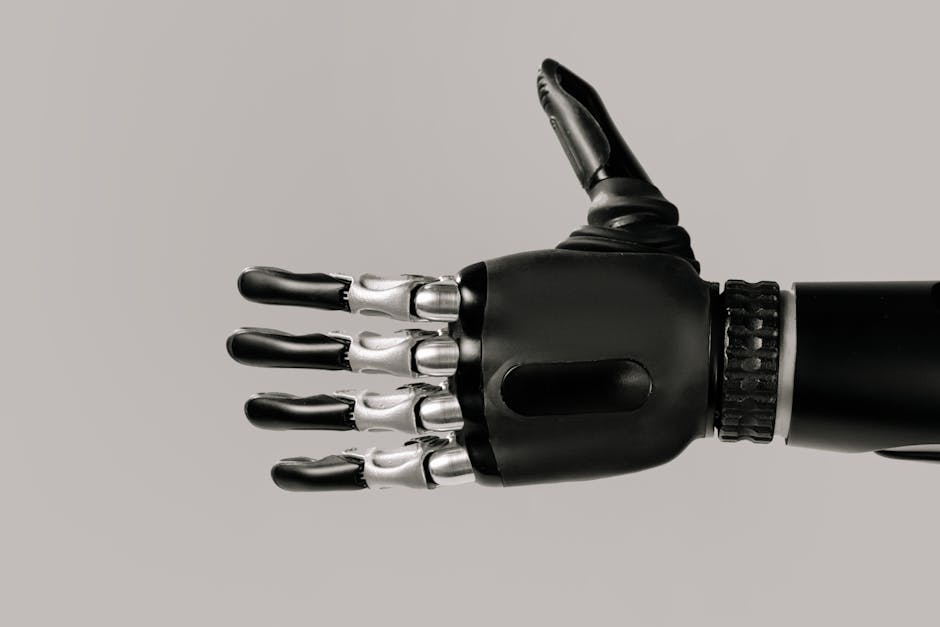
## Conclusion: A Transformative Era for Physical AI
The future of physical AI, powered by the integration of vision, language, and action models, is incredibly promising. We are on the cusp of a transformative era where robots will become more capable, intuitive, and integrated into our daily lives.
These VLA models are bridging the gap between the digital and physical worlds, creating intelligent agents that can perceive, understand, and act in complex environments. While challenges remain, the pace of innovation suggests that we will see increasingly sophisticated and helpful robots in manufacturing, healthcare, homes, and beyond. The ongoing research and development in this field are setting the stage for a future where human and artificial intelligence collaborate seamlessly in the physical realm.

